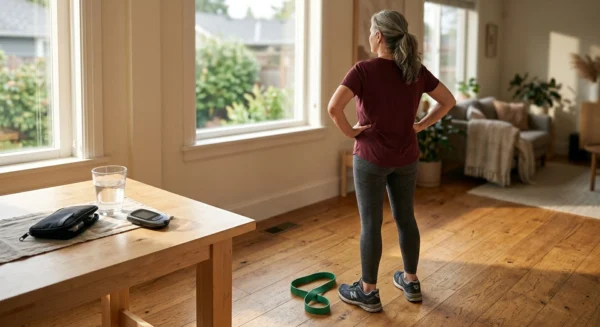
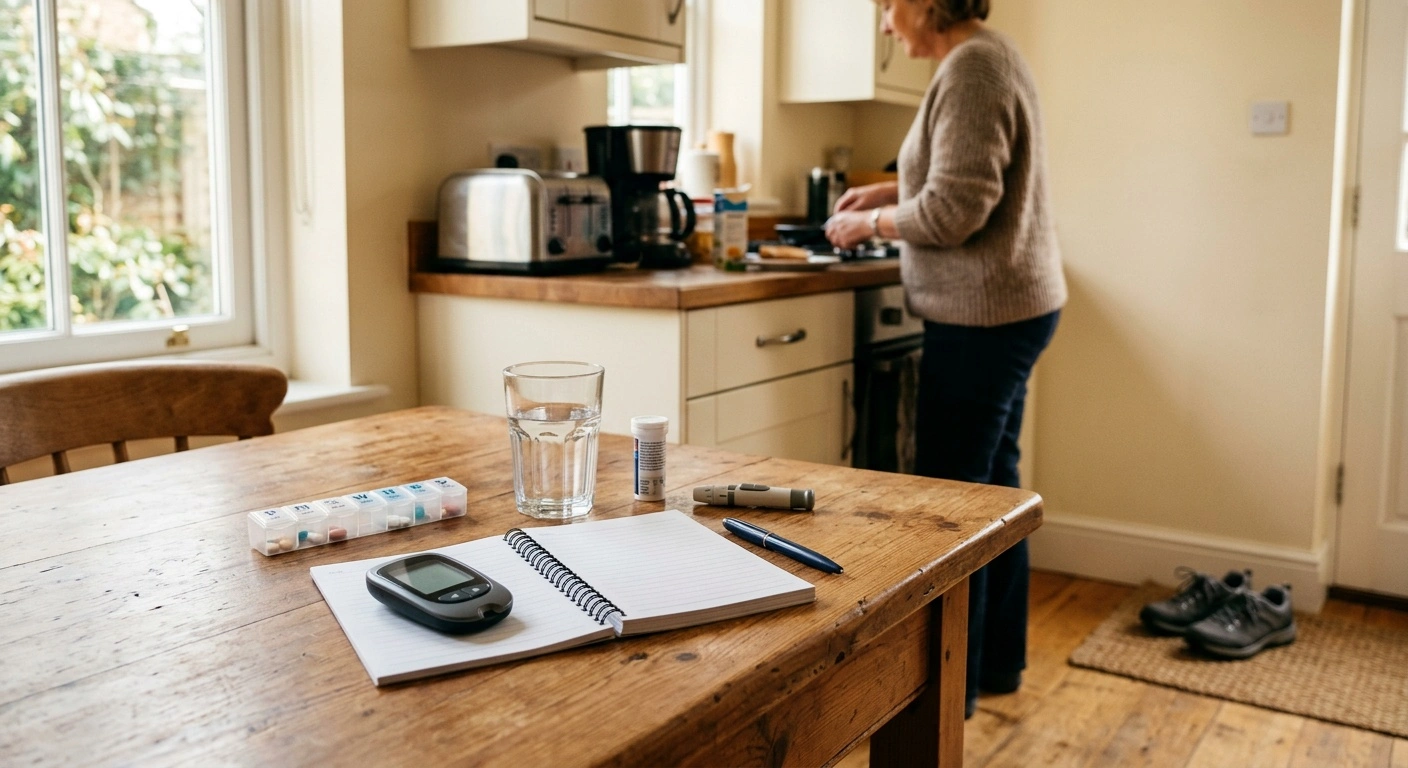
A daily diabetes routine can make blood sugar more predictable by creating a steady rhythm for meals, activity, medication, monitoring, sleep, and stress management. Your routine does not need to be rigid. It should work on ordinary days and remain flexible when life changes.
Food, movement, hormones, sleep, illness, and medication can affect glucose throughout the day. Between meals and overnight, the liver releases glucose for energy. Insulin helps move glucose into cells, while active muscles use more glucose.
Needs differ among people with type 1 diabetes, type 2 diabetes, prediabetes, and gestational diabetes. Medication, work schedules, food access, health conditions, and personal goals also shape a care plan. Use these ideas as general education, then ask your diabetes care team which steps and glucose targets fit you.
Build Your Daily Diabetes Routine Around a Few Anchors
Start with three or four habits tied to tasks you already do. For example, check glucose after brushing your teeth or walk after dinner. You could also place tomorrow’s supplies near your keys before bed.
A short written checklist can help when a diagnosis or new treatment feels overwhelming. Include glucose checks, medication, meals, movement, foot care, and symptom notes. Use a paper calendar, phone reminder, notebook, or pill organizer if appropriate for your medication.
Consistency does not require doing everything at the same minute. Instead, create enough structure to identify patterns. If your schedule changes often, make separate plans for workdays, home days, and weekends.
Ask your doctor, pharmacist, or diabetes care team about missed doses and medication timing. Do not change a dose or schedule without professional guidance.
Begin the Morning With Information, Not Judgment
Your morning routine can reveal what happened overnight. If your plan includes fasting glucose checks, test before consuming anything except water. Record the result and any details that could explain it.
A high morning reading may reflect a late meal, poor sleep, illness, or insufficient medication coverage. The dawn phenomenon can also cause it. During this early-morning rise, hormones signal the liver to release glucose.
Experts debate the Somogyi effect, which describes an overnight low followed by a rebound high. Research suggests it occurs less often than clinicians once thought. Do not assume that a high morning reading means you need more medication.
A continuous glucose monitor (CGM) or timed checks may clarify what happens overnight. Ask your care team which approach makes sense for you.
Drink water in the morning unless a clinician has limited your fluids. Water does not “flush out” diabetes, but hydration supports circulation and replaces fluid lost through frequent urination. Report persistent thirst, frequent urination, headaches, or fatigue to your care team.
Make Meals Predictable Without Making Them Boring
Reasonably consistent mealtimes can help coordinate food, activity, and treatment. Timing matters especially for people using insulin or medication that can cause low blood sugar.
Carbohydrate has the most direct effect on glucose because digestion breaks it down into glucose. However, the portion, carbohydrate type, and other foods in the meal also influence the response. Fiber, protein, and fat usually slow digestion.
The Diabetes Plate Method offers a practical starting point. Fill half your plate with non-starchy vegetables, one-quarter with lean protein, and one-quarter with carbohydrate foods. For example, serve salad and green beans with baked chicken and a modest portion of brown rice.
Beans, fruit, milk, yogurt, bread, grains, and starchy vegetables contain carbohydrate. Many still provide valuable nutrients.
On a Nutrition Facts label, check the serving size and total carbohydrate first. Total carbohydrate includes starch, sugars, and fiber. The added sugars line only lists sugar added during processing.
One carbohydrate serving contains about 15 grams. However, the right amount depends on your activity, medication, body size, glucose goals, and other health needs.
Skipping meals affects people differently. Stress hormones may prompt the liver to release glucose, causing a rise. Other people may develop low blood sugar, particularly when using insulin or a sulfonylurea.
Ask a doctor, pharmacist, registered dietitian, or diabetes education specialist how meals should coordinate with medication. Do not skip or change medication because you plan to eat less.
Use Movement as Part of the Routine
Physical activity can lower glucose because working muscles use it for energy. Activity can also improve insulin sensitivity. These effects may continue after exercise ends.
A 10- or 15-minute walk after a meal can make a difference. Chair exercises, gardening, resistance bands, and household tasks also count when they are safe for you.
The American Diabetes Association recommends at least 150 minutes of moderate activity each week for most adults with diabetes. It also recommends resistance training two or three times weekly. You can divide that activity into manageable sessions.
Consult your care team before starting exercise if you have certain health concerns. These include heart or lung disease, balance problems, or diabetes-related eye, kidney, nerve, or foot complications.
Insulin and sulfonylureas can increase the risk of low blood sugar during or after activity. Follow your monitoring plan and carry fast-acting carbohydrate. Your clinician may need to individualize your food or medication plan.
Stop exercising if you develop shakiness, sweating, sudden weakness, dizziness, confusion, or a rapid heartbeat. Check your glucose and follow your low blood sugar treatment plan.
Low blood sugar means a reading below 70 mg/dL. A reading below 54 mg/dL is clinically significant. Use the 15-15 rule unless your care team has given you different instructions.
Take 15 grams of fast-acting carbohydrate, then recheck your glucose after 15 minutes. Repeat if it remains below 70 mg/dL. Confusion, seizure, or unconsciousness signals an emergency.
Call 911 for a severe low. Someone trained to use glucagon should give it if available.
Use Glucose Checks to Find Patterns
Monitoring helps most when each check answers a question. Useful times may include waking, before meals, after meals, around activity, before driving, and at bedtime. Also check when symptoms do not feel right.
Your testing schedule depends on your treatment plan. People using insulin often need more frequent monitoring than people who do not take glucose-lowering medication.
The American Diabetes Association provides general targets for many nonpregnant adults. Your care team may recommend different goals based on your circumstances. Pregnancy, age, other health conditions, and low blood sugar risk can affect those goals.
| Measurement | General ADA target for many nonpregnant adults |
|---|---|
| A1C | Below 7% |
| Before meals | 80 to 130 mg/dL |
| One to two hours after starting a meal | Below 180 mg/dL |
| CGM time in range | More than 70% of time between 70 and 180 mg/dL |
Record enough context to explain each reading. Note meals, activity, stress, illness, sleep, and medication. Look for trends across several similar days instead of reacting to one unexpected number.
Bring your meter or CGM reports, medication list, log, and questions to appointments. This information helps your care team evaluate patterns.
A CGM measures glucose in interstitial fluid rather than directly in the blood. As a result, the reading may lag behind blood glucose by several minutes. The difference can become more noticeable when glucose changes quickly.
Use a fingerstick when symptoms do not match the CGM reading. You should also confirm a reading when the device directs you to do so.
Protect Sleep and Manage Stress
Sleep belongs in a daily diabetes routine because poor sleep can make glucose harder to manage. It can raise cortisol and other stress hormones. These hormones prompt the liver to release glucose and may reduce insulin sensitivity.
Pain, sleep apnea, nighttime urination, low glucose, caregiving, and irregular schedules can disrupt rest. In the evening, dim the lights and reduce stimulating screen use. Prepare supplies for the next day and keep a reasonably consistent bedtime.
Tell a clinician if you snore loudly, wake gasping, develop morning headaches, or feel very sleepy during the day. These symptoms may point to sleep apnea. Treatment can support glucose management, mood, energy, and cardiovascular health.
Emotional stress can also raise glucose by triggering hormones that provide quick energy. Gentle activity, paced breathing, music, prayer, journaling, or a supportive conversation may reduce that response. These strategies complement medical care rather than replace it.
Tell your care team if anxiety, low mood, diabetes distress, or burnout interferes with self-care. Asking for support does not represent failure.
Take Extra Care With Insulin and Low-Causing Medications
Balanced meals, movement, sleep, hydration, foot checks, and pattern tracking can benefit many people. Insulin and sulfonylureas require additional precautions because they can lower glucose. The risk may rise when meals are late, carbohydrate intake falls, or activity increases.
Other diabetes medicines usually carry less risk of a low when taken alone. However, combining treatments can change that risk.
Take medication exactly as prescribed and use reminders if you often forget a dose. If the timing conflicts with your schedule, speak with your doctor or pharmacist. Do not move, skip, or change a dose on your own.
Ask what to do when a dose is late or missed. The correct response depends on the medication and circumstances.
Keep fast-acting carbohydrate in places where you may need it. Suitable locations include a bag, desk, bedside drawer, or exercise kit. Glucose tablets, regular soda, or juice can provide about 15 grams when measured correctly.
Check package directions and serving sizes. Avoid using chocolate as the first treatment because its fat can slow carbohydrate absorption.
If you face a risk of severe lows, ask your care team about glucagon. Teach close contacts where you keep it and how to use it. Medical identification can also help others recognize diabetes during an emergency.
Report repeated lows, nighttime lows, or reduced awareness of symptoms promptly. Your prescribing clinician may need to review the treatment plan.
Add Foot Care and Preventive Care to the Schedule
Check your feet daily if you have nerve damage, poor circulation, a previous wound, or changes in foot shape. Examine the tops, soles, heels, and spaces between your toes. Look for redness, blisters, cracks, swelling, drainage, or unusual warmth.
Use a mirror if you cannot see the soles. You can also ask someone you trust for help.
Wash your feet in warm, not hot, water. Dry them carefully, especially between the toes. Apply moisturizer to dry skin, but keep it away from spaces between the toes.
Wear clean socks and properly fitting shoes. Before putting shoes on, check inside for pebbles, rough seams, or other objects.
The American Diabetes Association recommends a comprehensive foot examination at least once a year. People with higher risks may need more frequent checks. The ADA also recommends eye examinations and kidney testing for people who meet the relevant screening criteria.
Kidney screening typically includes urine albumin and estimated glomerular filtration rate (eGFR). Ask when each screening is due because timing varies by diabetes type and previous results.
Report a blister, cut, color change, swelling, drainage, or slow-healing sore. Avoid aggressive home treatment. Sudden vision loss, severe eye pain, or major foot color changes require urgent medical assessment.
Troubleshoot Common Routine Problems
Unexpected readings provide information. They do not grade your effort. Before making changes, wash and dry your hands and repeat a fingerstick that seems inaccurate.
Then review meals, activity, sleep, stress, illness, and medication. Discuss medication changes with the prescribing clinician, pharmacist, or diabetes care team.
- Morning glucose stays high. Possible causes include the dawn phenomenon, evening food, poor sleep, illness, or medication coverage. Record bedtime and morning readings for several days. Ask whether your care team needs overnight information.
- Glucose rises more than expected after breakfast. The meal may contain more carbohydrate than expected. Morning hormones or treatment timing may also contribute. Compare similar breakfasts and review persistent patterns with your care team.
- Glucose falls during or after activity. Active muscles may use glucose quickly, especially when you take insulin or sulfonylureas. Check as directed, carry fast-acting carbohydrate, and use the 15-15 rule for a low.
- Glucose remains higher after poor sleep or stress. Stress hormones may prompt the liver to release more glucose. Keep meals and medication consistent when possible. Discuss frequent elevations instead of making an unapproved medication change.
- The meter and your symptoms disagree. Contaminated hands, damaged strips, or CGM lag may explain the difference. Wash and dry your hands, then repeat the test with properly stored supplies.
Focus on repeated timing rather than searching for one explanation. A pattern across several days gives your care team useful evidence. Seek help sooner for vomiting, breathing changes, confusion, dehydration, repeated lows, or rapidly worsening symptoms.
Prepare for Illness and Disrupted Days
Illness can raise glucose even when you eat less. Stress hormones signal the liver to release glucose. Follow the sick-day plan from your care team and monitor more often as directed.
Keep drinking fluids unless a clinician has restricted them. Check ketones if you have type 1 diabetes or your care team recommends it. Do not stop insulin solely because you are not eating.
Contact your care team for instructions about food, fluids, medication, and medical care. Seek advice early if you cannot keep fluids down.
Diabetic ketoacidosis (DKA) is a medical emergency. It occurs most often in type 1 diabetes, but people with type 2 diabetes can also develop it. Warning signs include vomiting, abdominal pain, fruity-smelling breath, rapid breathing, confusion, and high ketones.
Seek emergency care for possible DKA. People taking an SGLT2 inhibitor can develop DKA even when glucose is near the normal range.
Travel, shift work, religious fasting, and medical procedures can disrupt familiar timing. Plan for medication storage, supplies, meals, time-zone changes, and fast-acting carbohydrate. Ask your care team for specific instructions before altering medication or meal timing.
Keep Your Routine Realistic
An effective daily diabetes routine supports the basics and helps you notice changes. It does not need a long list of rules. Begin with one or two priorities, such as taking medication as prescribed or walking safely after dinner.
Add another habit after the first steps feel manageable. Review the plan whenever your schedule, health, medication, appetite, activity, or glucose patterns change.
Bring a short list of successes and obstacles to medical appointments. A registered dietitian or certified diabetes care and education specialist can help adapt the plan. Recommendations should fit your culture, budget, abilities, and treatment needs.
Some days will not go as planned. Return to the next useful step instead of compensating with extra medication, skipped food, or excessive exercise. Realistic habits and careful pattern tracking provide more value than trying to create a perfect day.