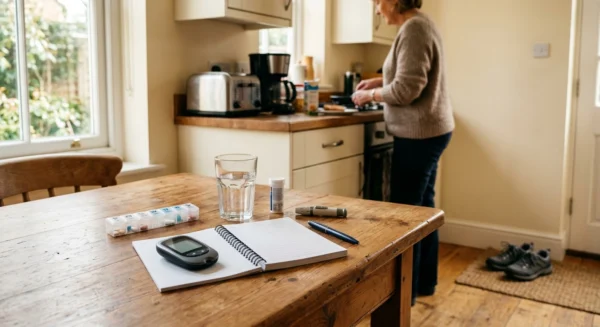
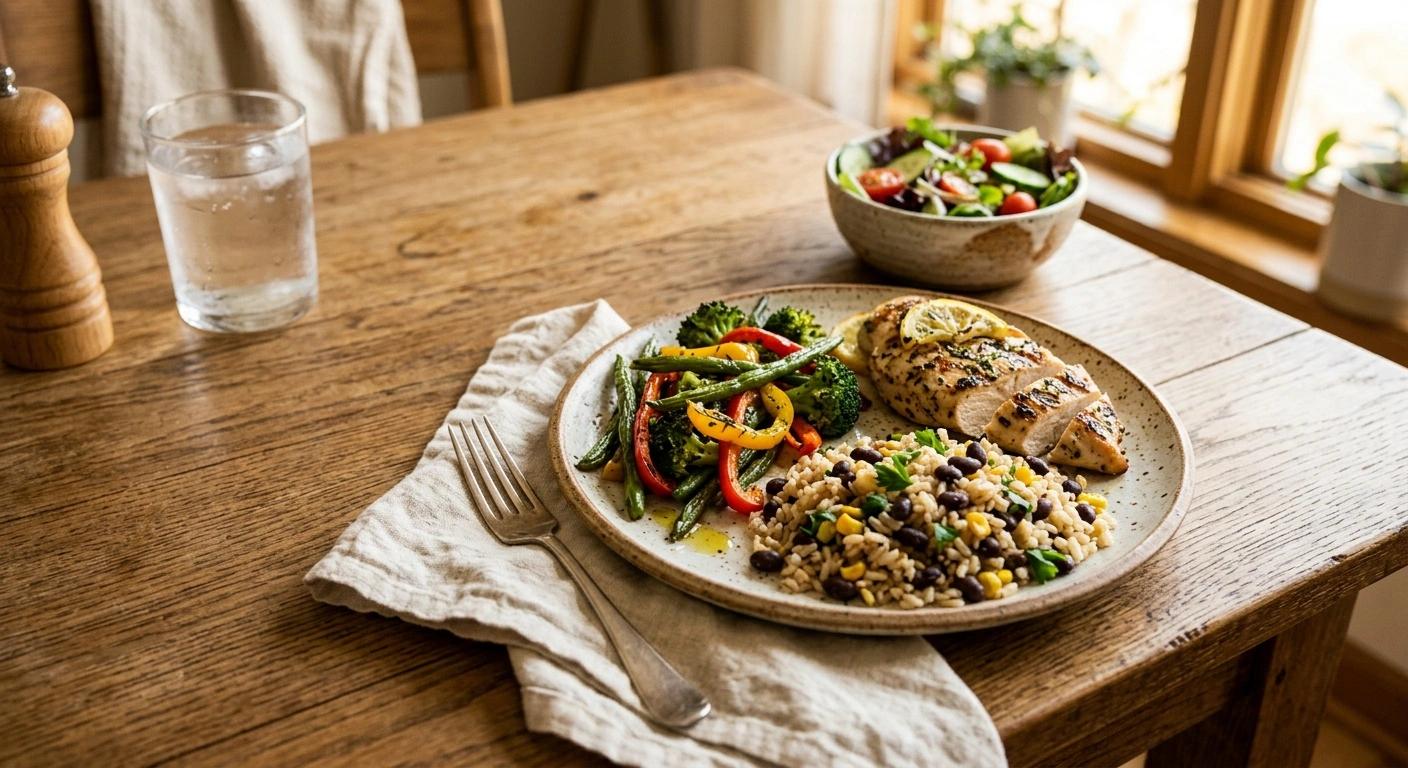
A balanced plate blood sugar strategy starts with a simple visual guide. Fill half your plate with non-starchy vegetables, one-quarter with lean protein, and one-quarter with carbohydrate foods. This Diabetes Plate Method helps keep carbohydrate portions consistent while adding fiber, protein, and useful nutrients. Choose water or another unsweetened drink alongside the meal.
You do not need special foods, exact measurements, or a separate meal from everyone else. The method works with familiar, affordable foods across many cultures and cooking styles. However, body size, activity, medications, health conditions, and glucose goals affect individual needs. Use the plate as a starting point, not a rigid prescription.
How the Balanced Plate Blood Sugar Method Works
Start with a plate about nine inches across. That is close to a standard dinner plate, rather than an oversized restaurant plate. Mentally divide the plate in half, then divide one half into two quarters. Give the largest section to non-starchy vegetables and the smaller sections to protein and carbohydrate foods.
| Part of the plate | What belongs there | Everyday examples |
|---|---|---|
| Half | Non-starchy vegetables | Broccoli, green beans, cabbage, salad greens, peppers, tomatoes, zucchini, cauliflower, okra, or mushrooms |
| One-quarter | Lean protein | Chicken, turkey, fish, eggs, tofu, or lean cuts of meat |
| One-quarter | Carbohydrate foods | Brown rice, corn, potatoes, beans, whole-grain pasta, fruit, tortillas, bread, milk, or yogurt |
| Alongside | Unsweetened beverage | Water, sparkling water, or unsweetened tea |
Beans and lentils provide both carbohydrate and protein, so they do not fit neatly into one category. They can fill the carbohydrate quarter when the meal also includes plenty of vegetables. Use small amounts of olive oil, avocado, nuts, or seeds for cooking or finishing the meal. Healthy fats do not need a large section of the plate.
For soup, casserole, gumbo, or stir-fry, aim for the same proportions across the entire meal. You do not need to separate every ingredient. This balanced plate blood sugar framework creates a useful pattern without making every meal look identical.
Why Plate Balance Affects Blood Glucose
Carbohydrate has the most direct effect on blood glucose. During digestion, the body breaks much of it into glucose for the brain, muscles, and other tissues. Large carbohydrate portions can cause a larger rise, especially when the food contains little fiber and digests quickly.
Non-starchy vegetables provide fiber, water, and volume with relatively little carbohydrate. Fiber slows digestion and helps a meal feel more filling, although it cannot prevent every glucose rise. Protein also supports fullness and usually has less immediate effect on glucose than carbohydrate.
Fat may slow stomach emptying and delay the glucose rise after a meal. As a result, a high-fat meal may keep glucose elevated later, even when an early reading looks reasonable. Pairing carbohydrate with vegetables, protein, and moderate fat often changes the post-meal glucose pattern. The goal is to choose a workable carbohydrate amount, not eliminate carbohydrate entirely.
Use Portions as a Guide, Not a Test
Measuring cups can help while you learn, but familiar objects offer quick references when measuring is impractical. One carbohydrate serving contains about 15 grams of carbohydrate. However, many people need more than one serving at a meal.
Packaged foods, recipes, and restaurant portions vary. Treat the following comparisons as estimates, not exact carbohydrate counts.
| Food or portion | Visual reference | How to use it |
|---|---|---|
| Cooked rice, pasta, or hot cereal | A tennis ball for roughly one cup | Fit the portion within the carbohydrate quarter. Check the label or recipe when counting carbohydrates. |
| Cooked meat, poultry, or fish | A deck of cards for roughly three ounces | Use this as a practical starting point for the protein quarter. |
| Cheese | Four dice for roughly one ounce | Keep saturated fat and sodium in mind when choosing the amount. |
| Nut butter | A ping-pong ball for roughly two tablespoons | Measure it occasionally because generous spoonfuls add up quickly. |
| Whole fruit | A small piece about the size of a tennis ball | Count fruit as a carbohydrate food. It also provides fiber, vitamins, and minerals. |
Plate size matters. The same proportions on a large plate can still create a large meal. Bowls are harder to judge, so picture how their ingredients would fit on a nine-inch plate. You can also serve extra vegetables on the side.
For sandwiches, wraps, and tacos, use a modest amount of bread or tortillas. Add a protein, then be generous with vegetables. A side salad, cooked vegetable, or raw vegetables can supply the missing half of the plate.
Appetite may change with illness, activity, stress, or certain medications. Eat slowly enough to notice fullness instead of assuming you must clear the plate. If portions remain confusing, consult a registered dietitian nutritionist or certified diabetes care and education specialist.
Choose Carbohydrates With Fiber and Useful Nutrients
The carbohydrate quarter can include grains, starchy vegetables, beans, fruit, milk, or yogurt. Whole grains and minimally processed foods often provide more fiber than refined choices. Still, portion size affects blood glucose. Brown rice contains carbohydrate even though it generally has more fiber than white rice.
Useful options include oats, barley, brown rice, whole-grain bread, corn, sweet potatoes, beans, lentils, plain yogurt, and whole fruit. You do not need to replace every refined food at once. Start by mixing brown and white rice, choosing whole-grain bread, or adding beans to a smaller rice portion.
On a Nutrition Facts label, first compare the serving size with the amount you plan to eat. Next, check Total Carbohydrate. This number includes starch, sugar, and fiber, making it the most useful figure for carbohydrate counting. About 15 grams of total carbohydrate equals one carbohydrate serving.
Dietary Fiber shows how much fiber the food contains. Added Sugars lists sugar added during processing. A product can contain no added sugar and still have enough total carbohydrate to raise glucose.
Do not rely on front-label claims such as “sugar-free,” “no added sugar,” or “whole grain.” Check the serving size, total carbohydrate, fiber, and ingredient list instead.
Practical Balanced Meal Ideas
A balanced plate does not require elaborate cooking. Begin with foods you already eat and identify what the meal lacks. If dinner centers on pasta, reduce the pasta portion and add chicken or beans. Fill the remaining space with salad, broccoli, or frozen mixed vegetables.
- Breakfast: Scrambled eggs with spinach and tomatoes, one slice of whole-grain toast, and a small piece of fruit
- Lunch: Tuna or chickpea salad on whole-grain bread with cucumber, tomato, and raw carrots
- Dinner: Baked chicken, green beans and cabbage, and a small baked potato
- Meatless meal: Lentils with roasted cauliflower and peppers, plus a small portion of brown rice
- Quick pantry meal: Reduced-sodium canned beans, frozen vegetables, and a small rice portion seasoned with herbs and spices
- Simple bowl: Salad greens and chopped vegetables topped with grilled fish or tofu, beans, and a spoonful of corn
Breakfast may not resemble a dinner plate, but the same structure works. Include protein, a measured carbohydrate food, and produce when practical. Plain yogurt with berries, nuts, and a modest amount of oats is one option.
If cereal is the main food, check its serving size and total carbohydrate. Add eggs or plain yogurt for protein, and avoid pouring an oversized bowl.
This information offers general education, not a personal meal prescription. A dietitian or diabetes care and education specialist can build a plan around your health needs and cultural foods.
Keep the Grocery List Affordable
Fresh produce works well, but frozen and reduced-sodium canned vegetables can also fill half the plate. Choose plain frozen vegetables instead of varieties with heavy sauces. Drain and rinse canned vegetables and beans when appropriate.
Cabbage, carrots, onions, greens, zucchini, and seasonal produce often stretch across several meals. Frozen vegetables also reduce waste because you can cook only what you need.
Budget-friendly proteins include eggs, canned tuna or salmon, chicken, tofu, dried beans, lentils, and store-brand nut butter. Beans can stretch ground meat in chili, soup, or taco filling while adding fiber. Rotisserie chicken saves time, but removing the skin can reduce saturated fat. People managing blood pressure or heart disease should also watch salty side dishes.
Useful carbohydrate staples include oats, brown rice, corn tortillas, whole-grain bread, potatoes, fruit packed in water, and plain yogurt. Specialty foods labeled for diabetes are generally unnecessary. Plan two or three flexible meals before shopping to reduce waste and keep the main plate components available.
Build a Better Plate When Eating Out
Restaurant meals often contain larger portions of carbohydrate, fat, and sodium than home-cooked meals. Start by identifying the protein, vegetable, and carbohydrate parts of your order. Choose grilled, baked, roasted, steamed, or broiled protein, then add a salad or non-starchy vegetable.
Some meals include bread, fries, rice, and a sweetened drink. Choose the one or two carbohydrate foods that matter most to you. Ask to replace one starch with vegetables, or save part of a large serving for later. Request sauces and dressings on the side to control the amount.
At a sandwich shop, choose lean protein and vegetables. Pair the sandwich with salad, vegetable soup, or fruit instead of automatically adding chips. At a Mexican-style restaurant, combine grilled protein, beans, vegetables, salsa, and a modest portion of tortillas or rice.
For breakfast, try eggs with vegetables and one serving of toast or potatoes. This meal is often easier to balance than pancakes, syrup, juice, and sweetened coffee served together.
Troubleshoot Your Plate and Glucose Patterns
One glucose reading cannot label a meal as good or bad. Activity, sleep, stress, illness, hydration, medications, and your starting glucose level also affect the result. When possible, compare similar meals under similar conditions. Look for a repeated pattern rather than reacting to one unusual reading.
The American Diabetes Association sets general targets for many nonpregnant adults. These include 80 to 130 mg/dL before meals and below 180 mg/dL after meals. Check post-meal glucose one to two hours after the start of the meal, unless your care team advises otherwise.
Your care team should personalize these targets, and pregnancy targets differ. Record the meal, approximate portions, medication timing, activity, and glucose results. That context helps your care team assess patterns accurately.
| Situation | Possible cause | What to try or who to ask |
|---|---|---|
| Glucose repeatedly rises above your target after a meal | The meal may contain a large carbohydrate portion, sweetened drinks, sauces, or several carbohydrate foods. | Check portions and labels, choose water, and discuss persistent patterns with your diabetes care team. |
| Glucose looks reasonable soon after eating but rises several hours later | A high-fat meal may delay digestion. | Note the meal and timing. Ask your care team when they want you to monitor. |
| You feel hungry soon after eating | The meal may lack protein, fiber, or sufficient volume. | Add non-starchy vegetables, lean protein, or a fiber-rich carbohydrate in an appropriate portion. |
| Breakfast causes a larger rise than the same carbohydrate amount later | Morning hormones can make some people less sensitive to insulin. | Compare several mornings and ask your care team about adjusting breakfast composition. |
| Readings vary despite similar meals | Stress, sleep, activity, illness, medication timing, or inaccurate portion estimates may contribute. | Keep a short log and bring your meter or CGM reports to your next appointment. |
If You Take Insulin or Medicine That Can Cause Lows
People who take insulin or sulfonylureas must consider medication action as well as plate balance. Eating less carbohydrate than usual may raise the risk of low blood sugar. Delaying or skipping a meal can also cause a low, especially when activity increases.
Do not change or skip diabetes medication on your own. Discuss meal changes and recurring patterns with your doctor, pharmacist, or diabetes care team.
Low blood sugar means a reading below 70 mg/dL. A reading below 54 mg/dL is clinically significant. For glucose below 70 mg/dL, follow the 15-15 rule unless your care team gave you different instructions.
Take 15 grams of fast-acting carbohydrate, wait 15 minutes, and recheck your glucose. Repeat these steps if the reading remains below 70 mg/dL. Options include glucose tablets or gel, four ounces of juice, or enough regular soda to provide 15 grams of carbohydrate.
Chocolate, peanut butter, and other high-fat foods act too slowly for initial treatment. After glucose returns to a safe range, follow your care team’s instructions about eating a meal or snack.
Severe hypoglycemia can cause confusion, seizures, or unconsciousness. Call 911 in an emergency. Someone trained to use glucagon should give it when available.
Make the Plate Method Fit Real Life
A useful balanced plate blood sugar plan should fit meals you can repeat. Start with one meal you eat often and adjust its proportions. Add a vegetable, make the carbohydrate portion easier to see, or include protein when the meal lacks it.
Check glucose according to your care team’s instructions. Notice patterns in hunger, energy, and readings. Travel, celebrations, illness, and busy weeks may disrupt your routine. The next meal gives you another chance to return to the basic structure.
The plate method provides a practical foundation, but it cannot replace individual medical or nutrition guidance. Bring meal notes, questions, and glucose patterns to your diabetes care team. Together, you can adapt the method to your medications, health needs, culture, budget, and goals.