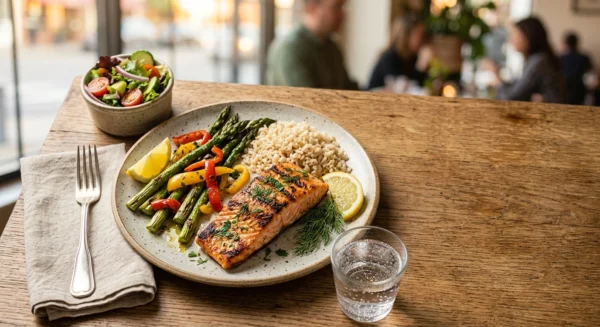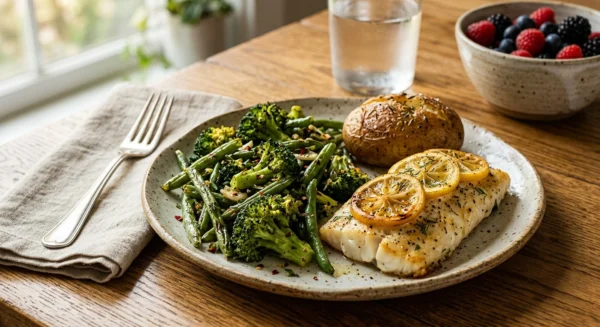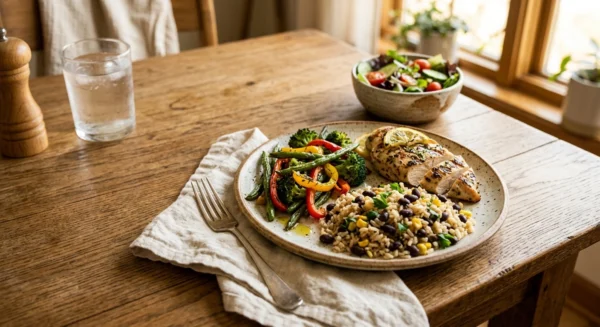
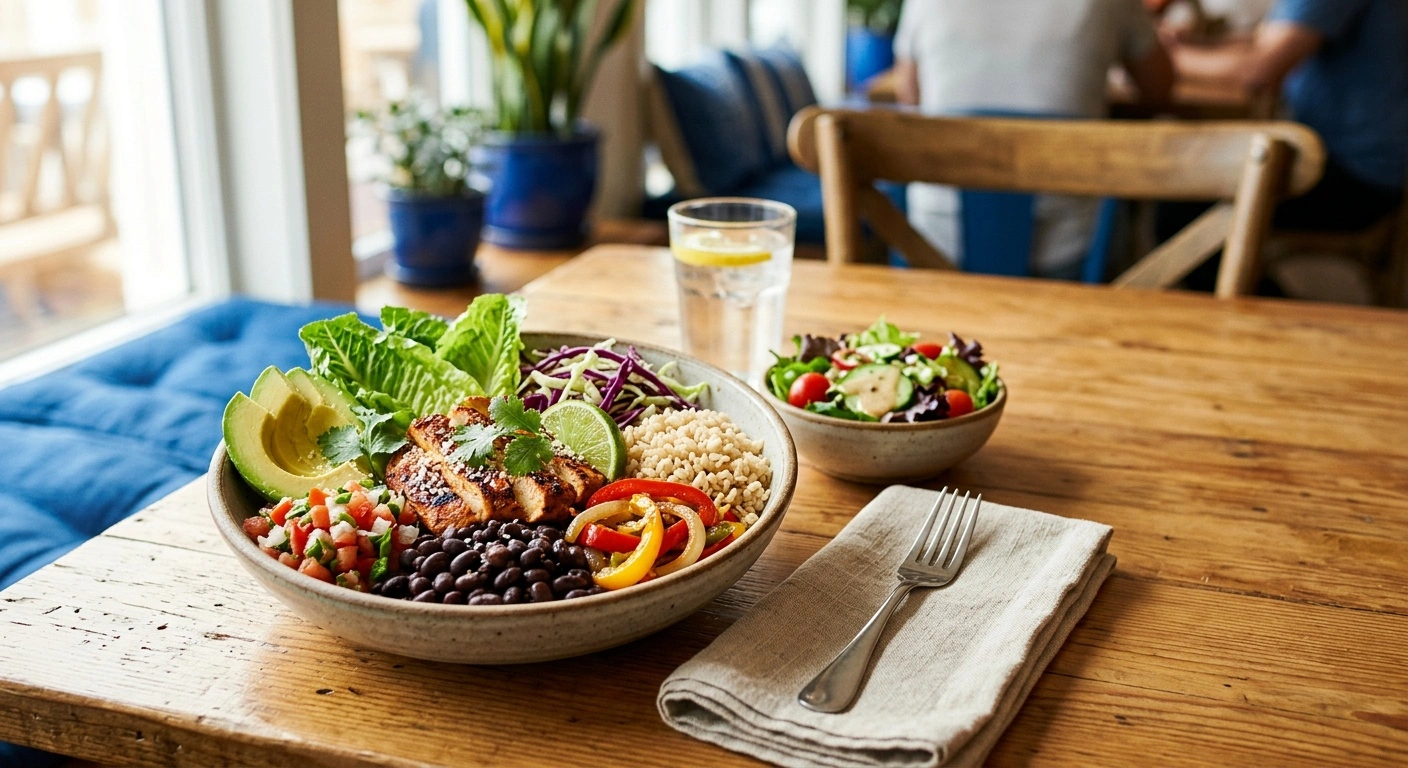
The most useful fast food blood sugar choices follow the Diabetes Plate Method as closely as the menu allows. Aim for plenty of non-starchy vegetables, a moderate portion of lean protein, and a smaller portion of carbohydrate. For example, order a grilled chicken sandwich with extra vegetables and a side salad instead of large fries. A burrito bowl with vegetables, beans, chicken, and a modest scoop of rice follows the same approach.
Buns, tortillas, rice, potatoes, sweet drinks, and desserts usually have the most immediate effect on blood sugar. Protein, fat, and fiber can slow digestion, but they do not cancel the carbohydrate in a meal. You do not need to build a perfect plate every time. Consistent choices about drinks, portions, cooking methods, and sides can make fast food easier to fit into a diabetes plan.
This guidance applies to adults with type 1 diabetes, type 2 diabetes, or prediabetes. However, individual carbohydrate needs and glucose targets vary. People with gestational diabetes should follow the meal and glucose targets provided by their obstetric and diabetes care teams.
A Simple Framework for Fast Food Blood Sugar Choices
The American Diabetes Association’s Diabetes Plate Method fills half the plate with non-starchy vegetables. Lean protein fills one-quarter, while carbohydrate foods fill the remaining quarter. Fast-food meals rarely arrive in those proportions, but the method still offers a practical ordering guide.
First, identify the main carbohydrate. It may be a bun, tortilla, rice, noodles, potatoes, biscuit, or breaded coating. Next, choose grilled, roasted, or baked protein instead of a heavily breaded or fried option. Add lettuce, tomato, cabbage, peppers, onions, broccoli, green beans, or a side salad when available.
Choose water, sparkling water, unsweetened tea, or plain coffee instead of a sugar-sweetened drink. Check sauces and dressings because some contain substantial added sugar. Creamy varieties can also add enough fat to slow digestion and delay the glucose rise. Ask for sauce on the side so you control the amount.
Large meals can be difficult to estimate and may provide several carbohydrate servings. Choose a smaller size, share part of the meal, or save a portion for later. Refrigerate leftovers promptly if you plan to keep them.
How Common Fast-Food Meals Affect Blood Sugar
A single meal may contain several concentrated carbohydrate sources, such as a large bun, fries, ketchup, and regular soda. Together, they can produce a larger glucose rise than any one item. Portion size often matters more than whether someone labels a food “good” or “bad.”
High-fat meals may cause a slower, longer-lasting rise because fat delays stomach emptying. This pattern often follows pizza, fried food, loaded burgers, and creamy pasta. An early glucose reading may not show the meal’s full effect.
Vegetables, beans, and whole grains provide fiber, which can slow digestion and increase fullness. Protein can also make a smaller carbohydrate portion feel more satisfying. Responses vary, so glucose readings can help you identify your own patterns.
Burgers and Chicken Sandwiches
A single burger or grilled chicken sandwich is usually easier to manage than a double or triple sandwich. A regular bun also contains less carbohydrate than an oversized bun. Add lettuce, tomato, onion, or other vegetables for extra volume and texture.
A grilled chicken fillet usually contains less refined carbohydrate than a breaded fillet. Breading adds starch, while frying often adds substantial fat. Check restaurant nutrition information when available because recipes and portion sizes differ.
Cheese, bacon, and creamy sauces may contain little carbohydrate, but they can add saturated fat and sodium. This matters because diabetes increases the risk of heart and kidney disease. Mustard, salsa, or a small amount of another sauce may be a lighter alternative.
If you want fries, choose the smallest portion or share an order. Pairing large fries with a full sandwich and sweet drink creates several carbohydrate sources. Keeping the fries while switching to an unsweetened drink can still make a meaningful difference.
Mexican-Style Fast Food
A bowl makes ingredients and portions easier to see. Start with lettuce or other vegetables, then add chicken or another protein. Beans, salsa, and a modest serving of rice can complete the meal.
Beans contain carbohydrate, but they also provide fiber and protein. As a result, they may affect glucose differently from refined bread or chips. Rice, beans, corn, tortillas, and chips still count as carbohydrate foods.
Choose one main starch instead of automatically combining rice, chips, and several tortillas. For example, keep the rice and skip the chips. Fajita vegetables, cabbage, pico de gallo, and salsa add volume without creating another large starch portion.
Sour cream, cheese, queso, and guacamole add varying amounts of fat and calories. Small portions can keep the bowl from becoming overly heavy. Ask for these toppings on the side if the restaurant tends to serve large scoops.
Pizza and Sandwich Shops
Pizza contains carbohydrate in the crust, protein in the cheese and toppings, and often considerable fat. This combination may raise glucose several hours after the meal. Thin crust usually contains less bread per slice than thick, stuffed, or deep-dish crust.
Pair one or two slices with a side salad or non-starchy vegetables. This creates a more balanced meal than eating pizza alone until full. Vegetable toppings add some fiber, while processed meats often add sodium and saturated fat.
At a sandwich shop, choose a smaller sandwich with lean protein and plenty of vegetables. An oversized sub may contain several servings of bread. Whole-grain bread can provide more fiber, but the total carbohydrate still depends on portion size.
Mayonnaise, oil, cheese, and creamy dressings do not always raise glucose quickly. However, large amounts add calories and may delay the glucose rise. Use moderate portions and request rich dressings on the side.
Breakfast and Coffee Stops
Fast-food breakfasts become carbohydrate-heavy when they combine a biscuit, potatoes, sweet coffee, and juice. Eggs or another protein can balance a smaller English muffin, toast portion, or tortilla. You can also skip the potatoes or replace the sweet drink.
Biscuits, croissants, pancakes, waffles, and pastries contain carbohydrate even when they do not taste very sweet. Breakfast meats add protein but often contain considerable sodium and saturated fat. Treat them as occasional additions rather than the foundation of every breakfast.
Flavored coffee drinks may contain carbohydrate from syrup, sweetened milk, whipped toppings, and drizzles. Order an unsweetened drink and add a small amount of milk if desired. This approach makes the carbohydrate content easier to estimate.
Plain oatmeal can work well, especially with nuts. Sweetened toppings, dried fruit, and oversized portions can raise its carbohydrate content quickly. Check the full nutrition listing instead of relying on labels such as “oat,” “whole grain,” or “protein.”
Asian-Style Quick-Service Meals
Rice and noodles provide most of the carbohydrate in many quick-service Asian-style meals. Restaurant portions can be generous. Choose a smaller serving and add non-breaded protein with vegetables.
Steamed, grilled, or stir-fried dishes are usually easier to assess than battered and deep-fried choices. Sweet sauces can add significant carbohydrate even when the dish tastes savory. Request sauce on the side and use enough for flavor.
Broccoli, cabbage, mushrooms, green beans, and peppers can increase meal volume. Preparation methods still matter because cooks may add oil, sugar, or salty sauces. Review restaurant nutrition information when possible.
Broth-based soups may contain less carbohydrate than noodle-heavy meals, but they can carry substantial sodium. People managing high blood pressure, heart disease, or kidney disease may need stricter sodium limits. A registered dietitian or medical care team can provide individual guidance.
Useful Swaps That Keep the Meal Satisfying
Practical fast food blood sugar choices preserve the parts of a meal you enjoy while changing one high-impact item. Replacing a sweet drink often helps more than making several minor topping changes. Reducing an oversized starch portion can also help without eliminating carbohydrate.
Recipes and portions vary among restaurants, so use the following comparisons as general guidance. Restaurant nutrition information offers the most accurate details. Check the serving size and total carbohydrate for everything you plan to eat.
| Instead of | Consider | Why it may help |
|---|---|---|
| Sweet tea, regular soda, lemonade, or a sweetened coffee drink | Water, unsweetened tea, sparkling water, or plain coffee | Removes a concentrated source of rapidly absorbed carbohydrate |
| Large fries as the automatic side | Small fries, shared fries, a side salad, fruit, or vegetables | Reduces the starch portion or adds fiber and volume |
| Double or triple sandwich | Single sandwich with extra vegetables | Keeps the total portion more manageable |
| Breaded or battered protein | Grilled, roasted, or unbreaded protein | Avoids carbohydrate from breading and usually reduces fat |
| Large burrito with rice, beans, chips, and several tortillas | Bowl with vegetables, protein, beans, and a modest scoop of rice | Makes the main carbohydrate sources easier to see and portion |
| Thick-crust pizza by itself | Thin-crust pizza with salad or non-starchy vegetables | Reduces the bread portion and adds a filling side |
| Sauce poured over the entire meal | Sauce or dressing on the side | Provides more control over added sugar, fat, and sodium |
Drinks, Sides, and Condiments Can Change the Meal
The drink and side can provide as much carbohydrate as the entrée. The body absorbs liquid sugar quickly because it requires little digestion and usually contains little fiber. Juice also raises blood sugar, even though it comes from fruit.
Whole fruit generally provides more fiber and takes longer to eat than juice. However, it still contains carbohydrate. Check the portion if you count carbohydrates or match insulin to meals.
Fries, hash browns, chips, rice, biscuits, and bread all provide starch. Adding them to a meal with a bun or tortilla creates multiple carbohydrate sources. These foods are not forbidden, but their portions and combinations matter.
Ketchup, barbecue sauce, teriyaki-style sauce, sweet chili sauce, and some dressings contain added sugars. Creamy condiments may contain substantial fat and sodium. Order condiments on the side or use a smaller amount.
Estimating Carbohydrate Without Nutrition Information
One carbohydrate serving contains about 15 grams of carbohydrate. Restaurant portions may contain several servings. Begin by identifying every carbohydrate food in the meal rather than trying to guess one exact total.
Count the bun, tortilla, rice, noodles, potatoes, beans, fruit, milk, sweetened sauce, and dessert. Plain meat, fish, chicken, and eggs generally contain little carbohydrate. Breading, glazes, and sweet sauces can change that.
When a restaurant provides nutrition information, look at total carbohydrate rather than sugar alone. Total carbohydrate includes starch, sugars, and fiber. It gives a more complete picture of the food’s likely glucose effect.
Fiber can slow digestion, while the added sugars line shows how much sugar the restaurant added during preparation. Some restaurants list sauces, sides, toppings, and drinks separately. Include each item you plan to consume.
A registered dietitian nutritionist or certified diabetes care and education specialist can help set an individual carbohydrate target. This support can be especially useful for people who use mealtime insulin. Do not adjust insulin solely from a general estimate without guidance from your care team.
Portion Strategies That Do Not Rely on Willpower
Combination deals and size upgrades can make fast-food portions much larger than a typical home meal. Choose the regular or smallest practical size when ordering. This removes the pressure to stop halfway through a large container.
You can also order one entrée and decide separately whether you need a side. Eat slowly enough to notice fullness. Hunger may change once you finish the main item.
If you plan to save food, divide it before you start eating. Sharing a side offers another way to enjoy it without making it the largest part of the meal. Store leftovers safely and refrigerate them promptly.
Do not assume every salad offers a lower-carbohydrate choice. Breaded meat, tortilla strips, dried fruit, cheese, and generous dressing portions can change the meal substantially. A salad with grilled protein, vegetables, and dressing on the side is easier to evaluate.
Special Considerations for Insulin and Medicines That Can Cause Lows
Insulin and sulfonylureas can cause low blood sugar, so meal timing matters. Ask your doctor, pharmacist, or diabetes care team how to handle restaurant delays. Do not change, delay, or skip a dose on your own.
Service delays and unexpected portions can make glucose timing harder to predict. Meals with much more fat than usual may also delay carbohydrate absorption. Therefore, an early reading may not show the full effect.
Blood sugar below 70 mg/dL is low. A reading below 54 mg/dL is clinically significant. Follow the treatment plan your care team has provided.
The 15-15 rule calls for 15 grams of fast-acting carbohydrate followed by another glucose check in 15 minutes. Repeat the process if the level remains low. Glucose tablets, glucose gel, regular soda, or juice can supply fast-acting carbohydrate.
Do not use a burger, chocolate, or another high-fat food as the first treatment for a low. Fat can slow the sugar’s absorption. Severe hypoglycemia with confusion, seizure, or unconsciousness requires emergency help. Call 911, and have a trained person give glucagon if available.
Troubleshooting Fast-Food Glucose Patterns
One glucose reading does not prove that a food will always cause the same response. Activity, stress, sleep, illness, meal timing, and starting glucose can all affect the result. Look for patterns across several similar meals.
Record what you ate, the approximate portion, and the time. Note relevant activity, stress, illness, or medication timing. These details can help your care team interpret the pattern.
Continuous glucose monitors measure glucose in interstitial fluid, so readings may lag behind blood glucose by several minutes. Use a fingerstick when symptoms do not match the CGM reading. Bring recurring patterns to your diabetes care team instead of changing medication yourself.
| Situation | Likely cause | What to try or who to ask |
|---|---|---|
| Glucose rises quickly after the meal | A sweet drink, large refined-carbohydrate portion, or several starches eaten together | Choose an unsweetened drink, select one main starch, or reduce the portion next time |
| Glucose looks acceptable at first but rises several hours later | A high-fat meal may have delayed digestion | Record the later pattern and discuss it with your diabetes care team, especially if you use insulin |
| You feel hungry soon after eating | The meal may contain mostly refined carbohydrate with little protein, fiber, or vegetables | Add grilled protein, beans, vegetables, or another fiber-containing side |
| Glucose repeatedly runs high after a salad | Breaded meat, sweet dressing, tortilla strips, dried fruit, or a large portion may contribute carbohydrate | Check each component and request dressing on the side |
| You develop a low while waiting for food | The meal arrived late after insulin or a medicine that can cause lows | Treat the low and ask your diabetes care team for a safe plan for future delays |
| Your usual order affects you differently from one visit to another | Portions, preparation, activity, stress, or starting glucose may have changed | Compare several visits and note the circumstances instead of relying on one reading |
Build a Fast-Food Routine That Works for You
A workable routine can start with three steps: choose an unsweetened drink, order a regular-size entrée, and add vegetables. On another day, keep the fries but choose a smaller sandwich and skip the sweet beverage. Small, repeatable changes often work better than rigid rules.
Save two or three reliable orders from restaurants you visit often. This reduces decision fatigue when you feel hungry or rushed. Restaurant websites can help you compare total carbohydrate, fiber, saturated fat, and sodium before ordering.
Check glucose according to your care plan, especially if you use insulin or experience large after-meal changes. Your diabetes type, medications, activity, body size, health conditions, and glucose goals all shape your needs. Use the results to refine your fast food blood sugar choices with your care team.
Fast food does not have to represent failure or an all-or-nothing decision. Focus on a predictable portion, one main starch, adequate protein, and vegetables when available. The goal is a satisfying meal that supports realistic blood sugar management.