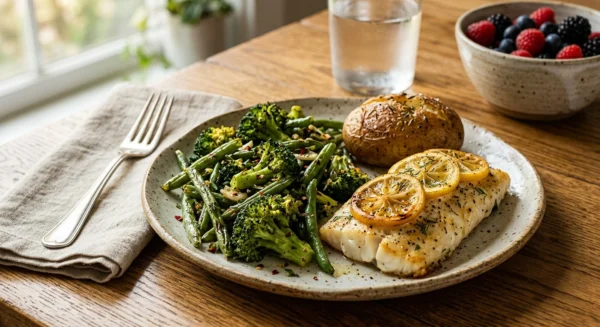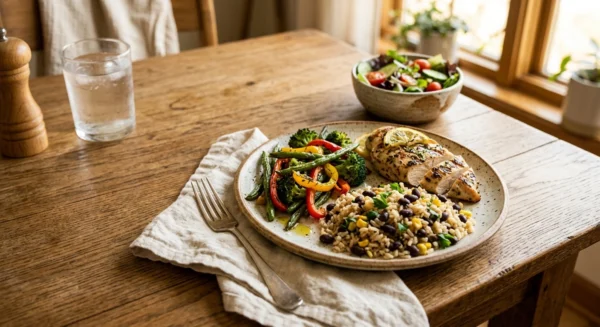
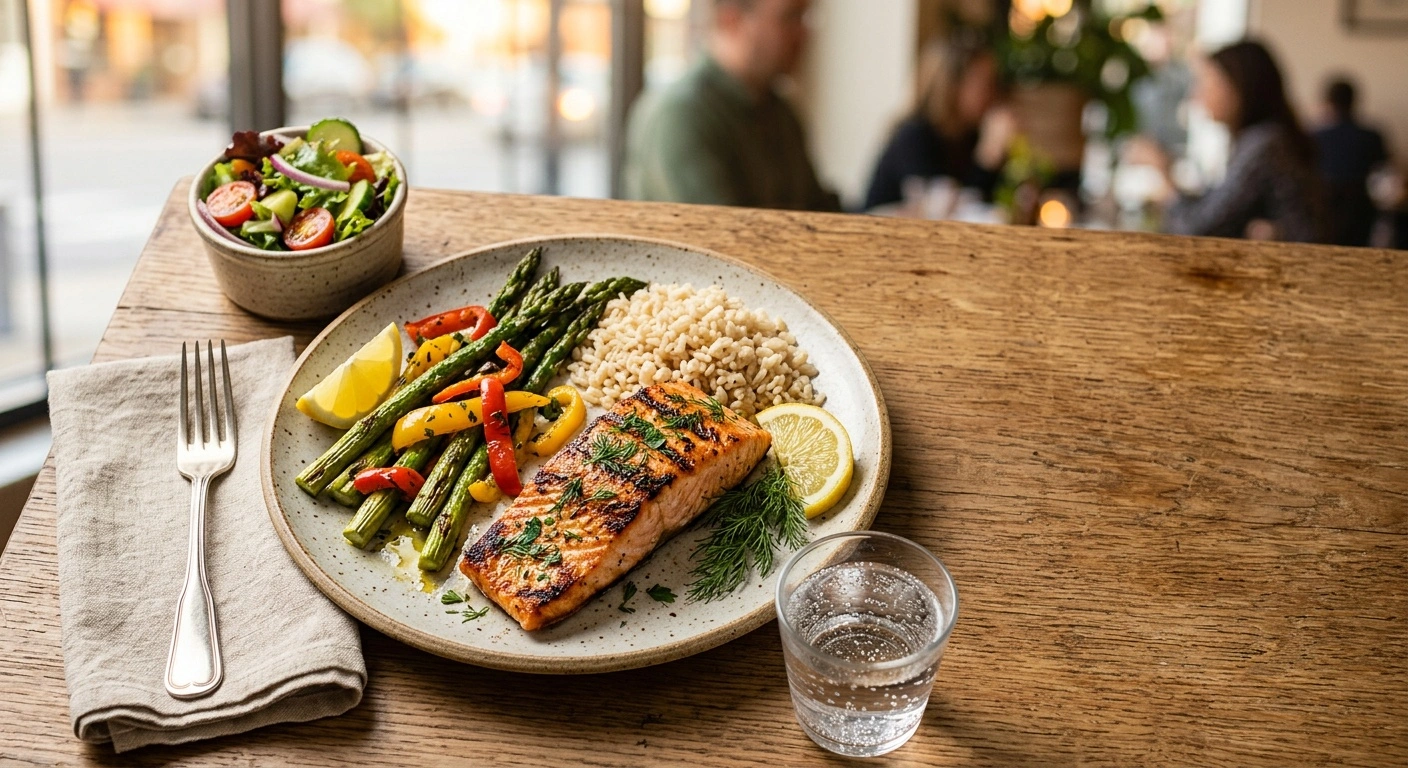
Eating out with diabetes gets easier when you use the Diabetes Plate Method. Fill about half your plate with non-starchy vegetables, one-quarter with lean protein, and one-quarter with carbohydrate foods. This visual guide can help limit large blood sugar rises without requiring you to calculate every bite.
Carbohydrates still belong in a balanced meal, but restaurant portions often contain more than expected. Rice, pasta, bread, potatoes, tortillas, sweet drinks, sauces, and desserts can add up quickly. You do not need to skip meals or order the most restrictive item. Instead, choose the carbohydrate you want most and build the meal around vegetables and protein.
Individual needs depend on body size, activity, glucose goals, medications, and other health conditions. Use these ideas as general education rather than a personal meal plan.
Why Restaurant Meals Can Raise Blood Sugar Quickly
Your body breaks carbohydrates down into glucose during digestion. Therefore, a meal with several concentrated carbohydrate sources may cause a sharp rise. A restaurant entrée might combine a large serving of rice with bread, sweet sauce, and a sugary drink. Together, those foods may contain much more carbohydrate than your usual meal at home.
Restaurant food may also provide little fiber, especially when it relies on white bread, white rice, refined pasta, or fried coatings. Fiber slows digestion and may make the glucose rise more gradual. Protein and fat also slow digestion. However, a high-fat meal can delay a glucose rise for several hours rather than prevent it.
This delayed pattern matters for people with type 1 diabetes who match mealtime insulin to carbohydrate intake. Discuss insulin timing and dosing with your diabetes care team instead of making changes on your own.
The word “spike” has no universal medical definition, and some increase after eating is expected. Look for repeat patterns and work toward the glucose range set with your care team. A perfectly flat reading after every restaurant meal is not a realistic goal.
A Simple Plate Strategy for Eating Out With Diabetes
Start by finding a meal with vegetables, protein, and a carbohydrate you enjoy. Non-starchy vegetables include leafy greens, broccoli, cauliflower, green beans, peppers, mushrooms, zucchini, tomatoes, and asparagus. Lean protein choices include fish, chicken, turkey, eggs, tofu, beans, and lean cuts of meat.
For the carbohydrate quarter, choose one main source when practical. Options include rice, potatoes, pasta, beans, bread, corn, fruit, and tortillas. Beans also provide fiber and protein, which can make them satisfying.
If a meal includes bread, rice, and potatoes, choose the item you want most. Then ask for vegetables in place of one of the others. This approach manages the total amount without labeling foods as forbidden.
- Half the plate: Salad or cooked non-starchy vegetables, preferably without a heavy sweet glaze.
- One-quarter of the plate: Grilled, roasted, baked, steamed, or broiled protein.
- One-quarter of the plate: A moderate serving of rice, pasta, potato, beans, bread, or another carbohydrate food.
- Drink: Water, sparkling water, unsweetened tea, or another drink without added sugar.
Restaurant plates rarely arrive in these exact proportions, so use the method as a flexible guide. A registered dietitian or certified diabetes care and education specialist can adapt it to your preferences, culture, budget, and glucose patterns.
How to Find Hidden Carbohydrates on a Menu
Menu descriptions can reveal how a dish may affect blood sugar. Words such as glazed, sticky, honey, sweet chili, barbecue, teriyaki, battered, breaded, or crispy often signal added sugar, flour, or both. Creamy sauces may contain little sugar, but their fat can delay the glucose rise.
Salads are not always low in carbohydrate. Dried fruit, candied nuts, croutons, tortilla strips, sweet dressings, beans, and corn can increase the total. Ask for dressing or sauce on the side so you control the amount.
If the restaurant provides nutrition information, check total carbohydrate rather than sugar alone. Total carbohydrate includes starches, sugars, and fiber. For carbohydrate counting, it is usually the most useful number.
The nutrition label lists fiber within total carbohydrate. Fiber can slow digestion, while the added sugars line identifies sugar added during preparation or processing. One carbohydrate serving contains about 15 grams, but the right amount for each meal varies by person.
Realistic Orders at Common Restaurant Types
You do not need a special “diabetes menu” to build a balanced meal. First, identify the available vegetables and protein. Then choose a carbohydrate portion that fits your usual eating pattern.
Preparation still matters. For example, grilled food may contain sodium or carbohydrate from marinades and sauces. Ask about the preparation if the menu description lacks detail.
Restaurants commonly handle requests for extra vegetables, a side salad, no glaze, or sauce on the side. If the kitchen cannot make substitutions, decide how much of each item you want to eat. These examples offer starting points rather than prescriptions.
- American-style restaurant: Order grilled fish or chicken with vegetables and a baked potato. Use butter, sour cream, or other toppings in a moderate amount.
- Mexican or Tex-Mex restaurant: Try fajitas with grilled protein, peppers, beans, salsa, and a moderate number of tortillas. Consider choosing rice or chips instead of having both automatically.
- Italian restaurant: Pair grilled seafood or chicken with vegetables and a smaller serving of pasta. You could also order pasta with vegetables and protein rather than a large bowl of noodles alone.
- Asian restaurant: Choose a vegetable-and-protein stir-fry with a moderate serving of rice. Request sauce on the side when possible, since sweet, sticky, or breaded dishes usually contain more carbohydrate.
- Mediterranean restaurant: Combine grilled fish, chicken, or kebabs with salad, vegetables, hummus, and a moderate serving of pita or rice.
- Breakfast restaurant: Order eggs with vegetables, fruit, and one serving of toast or another starch. This avoids combining toast, pancakes, potatoes, and juice in one meal.
- Fast-food restaurant: Choose a regular-size sandwich or burger with fruit, vegetables, or a side salad. Breaded foods and large buns may provide more carbohydrate than grilled options.
- Pizza restaurant: Pair a smaller portion of thin-crust pizza with salad or non-starchy vegetables instead of eating several slices alone.
Kidney disease, heart failure, high blood pressure, celiac disease, and food allergies may require different choices. A registered dietitian and medical specialist can help you account for potassium, phosphorus, sodium, gluten, or other concerns.
Manage Restaurant Portions Without Making the Meal Feel Restrictive
Restaurant entrées often exceed the portions people serve at home. Eating more carbohydrate usually produces a larger glucose rise. Before eating, look at the whole plate and compare it with your typical meal.
You can move part of a large rice, pasta, or potato serving to one side. This simple step helps you set a portion before fullness becomes your only guide. You can always eat more if you remain hungry.
You might also share an entrée, order an appetizer-sized portion, or request a take-home container. Refrigerate leftovers promptly and follow safe food-storage practices. Eating slowly gives you more time to notice satisfaction, especially during a social meal.
Everyday visual references can help when the restaurant provides no nutrition information. A palm-sized piece of cooked meat or fish offers a practical protein reference. A fist-sized amount gives a rough guide for many starches and fruits.
These comparisons are approximate rather than exact measurements. Larger or more active people may need different portions. Consider how the portion fits your hunger, glucose response, health goals, and care plan.
Plan for Drinks, Appetizers, and Dessert
Sugar-sweetened drinks can raise glucose quickly because the body absorbs liquid carbohydrate easily. Regular soda, sweet tea, lemonade, juice, blended coffee drinks, and specialty beverages may contain substantial added sugar. Water or an unsweetened drink leaves more room for carbohydrate from food.
Appetizers can turn into an unplanned second meal, especially when they include bread, chips, fried coatings, or sweet sauces. If you want one, share it and choose an entrée with vegetables and protein. You can also ask the server to bring bread or chips with the meal instead of beforehand.
Dessert does not have to be off-limits. A small portion, shared dessert, or serving of fruit may fit better after a lighter entrée. If you choose dessert, consider reducing the bread, rice, pasta, or potatoes in the main meal.
Focus on the entire order. One food rarely explains the full glucose response when a meal includes several carbohydrate sources.
Alcohol Requires Extra Planning
Alcohol affects glucose differently from person to person. Beer, sweet wine, cocktails, and mixers can add carbohydrate and raise glucose at first. Later, alcohol can interfere with the liver’s release of glucose.
This effect may cause delayed low blood sugar hours later or overnight. The risk increases for people who take insulin or sulfonylureas. People may also mistake symptoms of low blood sugar for intoxication.
If you use insulin or a sulfonylurea, discuss alcohol safety and glucose monitoring with your diabetes care team. Do not change a medication dose for a drink unless your care team has provided a specific plan.
Avoid drinking on an empty stomach, and wear medical identification. Choose a carbohydrate-free mixer when practical. Keep in mind that a sugar-free mixer does not remove alcohol’s risk of delayed lows.
People who are pregnant or have certain liver or pancreatic conditions should avoid alcohol. The same guidance applies to anyone who has difficulty controlling alcohol intake or has received instructions not to drink.
Take Extra Care With Insulin or Medications That Can Cause Lows
Plate and portion strategies can help adults with type 1 diabetes, type 2 diabetes, or prediabetes. However, insulin and sulfonylureas create an added concern. Delayed meals, unexpected activity, alcohol, or less carbohydrate than planned can cause low blood sugar.
Restaurant waits are unpredictable. Carry fast-acting carbohydrate, and keep your glucose meter or continuous glucose monitor supplies available.
Do not change medication timing or dosage based on general menu advice. Ask your doctor, pharmacist, or diabetes care team for a plan covering meal delays, uncertain carbohydrate amounts, and high-fat meals. People with type 1 diabetes need particular care because too much or too little insulin can be dangerous.
Low blood sugar means a glucose level below 70 mg/dL. A reading below 54 mg/dL is clinically significant. Follow the 15-15 rule by taking 15 grams of fast-acting carbohydrate and checking again after 15 minutes.
Repeat the treatment if your glucose remains low. Suitable options include glucose tablets, glucose gel, regular soda, or enough juice to provide about 15 grams of carbohydrate. Chocolate and high-fat desserts act too slowly for initial treatment.
Severe low blood sugar with confusion, seizure, or unconsciousness is an emergency. Call 911, and have someone trained to use glucagon administer it. Never give food or drink to someone who cannot swallow safely.
Use Glucose Readings to Learn From the Meal
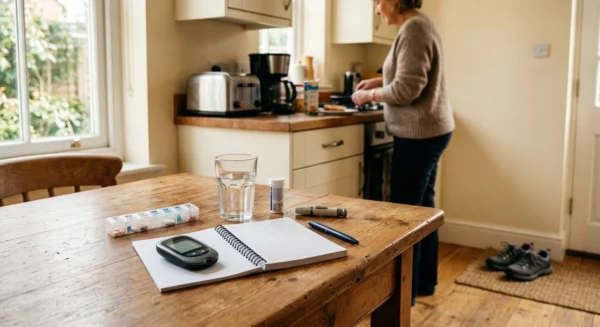
One high reading does not mean you failed or can never order that food again. Compare similar meals and look for a repeated pattern. If your care plan includes before-and-after checks, record those readings along with the meal details.
Note what you ate, the approximate portion, meal timing, activity, alcohol, and stress. These details can help you and your care team identify useful patterns.
The American Diabetes Association lists general targets for many nonpregnant adults. These include 80 to 130 mg/dL before meals and below 180 mg/dL one to two hours after a meal starts. For continuous glucose monitoring, a widely used goal is more than 70% of time within 70 to 180 mg/dL.
Your care team may set different targets. Goals often vary for older adults, pregnant people, those at high risk of lows, and people with other medical conditions.
A continuous glucose monitor measures glucose in interstitial fluid, so the result may lag behind blood glucose by several minutes. Use a fingerstick when your symptoms do not match the sensor reading. Bring patterns from several meals to your care team instead of changing medication after one restaurant result.
Troubleshoot Common Restaurant Glucose Patterns
Restaurant glucose patterns often make more sense when you consider the full meal and its timing. Record enough detail to identify likely causes, but do not expect a definite explanation every time. Stress, sleep, illness, hydration, activity, and medication timing can also affect glucose.
- Situation: Glucose rises quickly after the meal. Possible cause: The meal included refined carbohydrate, a sugary drink, bread, chips, or sweet sauce. What to try: Choose one main starch, add vegetables and protein, and request sauce on the side.
- Situation: The early reading looks acceptable, but glucose rises several hours later. Possible cause: Pizza, fried food, or creamy pasta delayed digestion because of its fat content. What to try: Track the pattern and discuss it with your care team, especially if you use insulin.
- Situation: Glucose runs high after a meal that seemed balanced. Possible cause: A salad or bowl contained sweet dressing, dried fruit, grains, beans, corn, or tortilla strips. What to try: Ask about the ingredients, order dressing on the side, and select the carbohydrate additions you value most.
- Situation: Glucose drops while you wait for the meal. Possible cause: The kitchen delay, extra activity, insulin, or a sulfonylurea contributed to the low. What to try: Use the 15-15 rule and ask your care team for a plan for future delays.
- Situation: Glucose remains high the next morning. Possible cause: A large late meal, delayed digestion, alcohol, stress, or poor sleep played a role. What to try: Compare several occasions and share the pattern with your care team.
A gentle walk after eating may help your muscles use glucose. Only walk if the activity is safe for you and your clinician has not advised against it. If you use insulin or a sulfonylurea, check glucose around activity and carry fast-acting carbohydrate.
Build a Restaurant Routine You Can Repeat
A sustainable routine does not depend on finding a flawless menu item. Scan the menu for vegetables and protein, select the carbohydrate you want, and consider the portion. Then choose an unsweetened drink and check the sauces, toppings, and extras.
This process works at sit-down restaurants, fast-food counters, family gatherings, and work lunches. It makes eating out with diabetes more predictable while leaving room for foods you enjoy.
Some meals will raise glucose more than expected, even when you plan carefully. Treat the result as information rather than a judgment about your effort. If restaurant meals repeatedly push glucose outside your target range, share a food and glucose record with your care team.
A registered dietitian, certified diabetes care and education specialist, or diabetes clinician can help you adjust your approach. Together, you can create a plan that fits your preferences, medications, health needs, and daily life.