bedtime snacks blood sugar planning starts with one fact: not everyone needs to eat before sleep. The right choice depends on your glucose pattern, medication, activity level, and usual dinner.
A planned snack may help prevent overnight hypoglycemia or satisfy genuine hunger. However, an unnecessary snack can raise morning glucose and add calories without solving the underlying problem.
Bedtime Snacks Blood Sugar Guidance: Who May Benefit?
People who take insulin or certain diabetes medicines may face a higher risk of overnight lows. Evening exercise, alcohol, illness, and a light dinner can also affect glucose during sleep.
Consider a snack if your diabetes care plan recommends one or your glucose tends to drop overnight. Frequent nighttime lows require a medication review, not just extra food.
Some people wake with high glucose because of the dawn phenomenon. Hormones released before waking can prompt the liver to release glucose. A bedtime snack does not reliably correct this pattern and may make it worse.
What to Look for in a Bedtime Snack
A useful snack often combines a modest portion of carbohydrate with protein, fiber, or unsaturated fat. This combination digests more slowly than sweets or refined starch alone.
Portion size matters. Start with a small serving unless your clinician has given you a specific carbohydrate target. Check nutrition labels because carbohydrate counts vary among brands.
Protein
Protein can make a small snack more satisfying. Plain Greek yogurt, cottage cheese, eggs, nuts, seeds, and cheese provide practical options.
Fiber-Rich Carbohydrates
Choose carbohydrates that contain fiber when possible. Fruit, oats, whole-grain crackers, and whole-grain toast usually provide more fiber than juice, cookies, or white bread.
Unsaturated Fats
Nut butter, nuts, seeds, and avocado supply unsaturated fat. Keep portions moderate because these foods contain substantial calories.
Six Practical Bedtime Snack Ideas
1. Plain Greek Yogurt With Berries
Pair about half a cup of plain Greek yogurt with a small handful of berries. Choose an unsweetened yogurt to avoid added sugar.
2. Apple With Peanut Butter
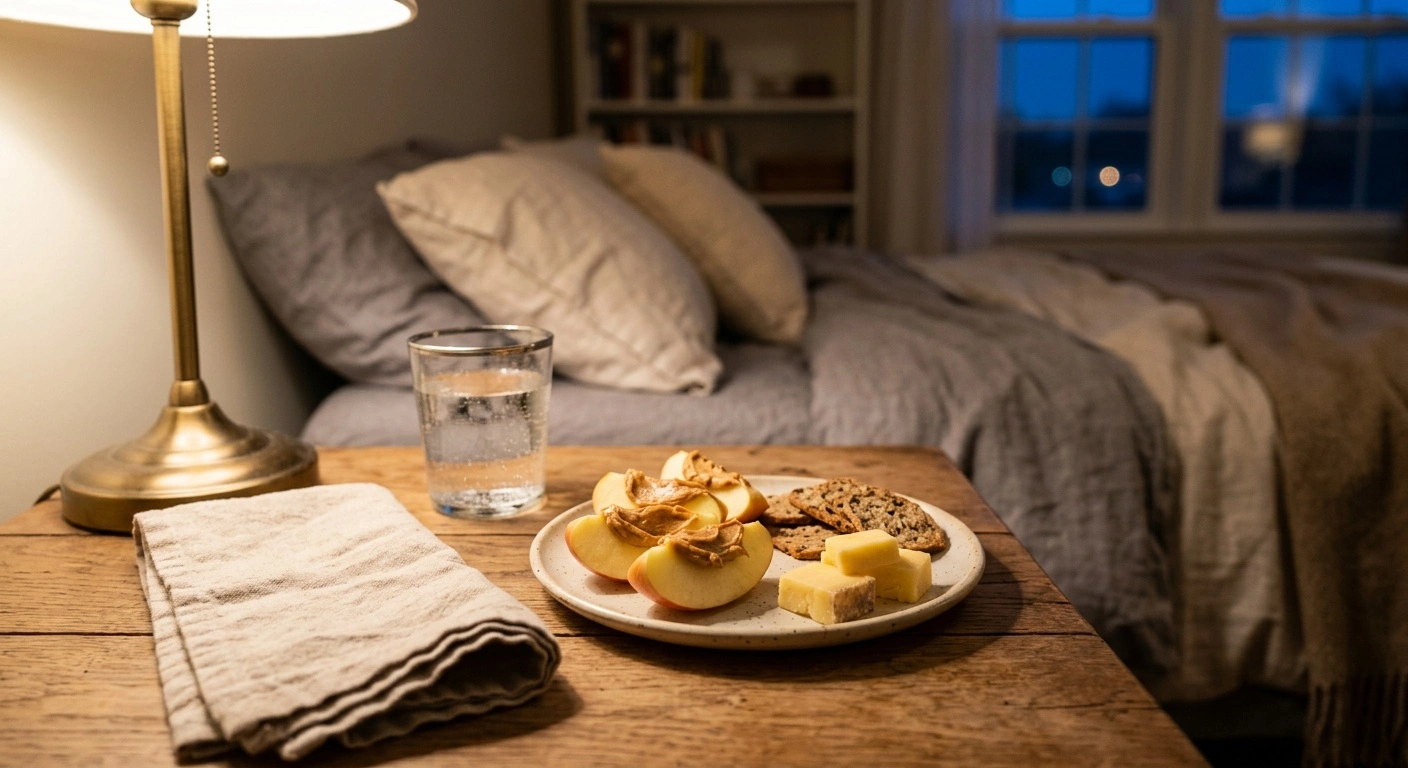
Serve half a small apple with one tablespoon of peanut or almond butter. The apple provides carbohydrate and fiber, while the nut butter adds fat and protein.
3. Whole-Grain Crackers With Cheese
Try a few whole-grain crackers with one ounce of cheese. Read the cracker label to confirm the serving size and total carbohydrate.
4. Cottage Cheese With Fruit
Combine half a cup of cottage cheese with a small portion of peach, pear, or berries. Select fruit packed in water rather than syrup.
5. Oatmeal With Nuts
Prepare a small serving of plain oatmeal and add chopped walnuts or almonds. Skip sweetened instant packets, which can contain substantial added sugar.
6. Vegetables With Hummus
Pair raw cucumber, peppers, or carrots with two tablespoons of hummus. This option works well when you want a savory snack with fewer carbohydrates.
Foods That May Raise Glucose Quickly
Candy, sweetened cereal, pastries, chips, and sugary drinks often provide more carbohydrate than a bedtime snack needs. They can cause a rapid rise in glucose, especially when eaten in large portions.
Alcohol also deserves caution. It may increase the risk of delayed hypoglycemia in people who use insulin or certain medications. Follow your clinician’s advice and avoid using alcohol as a sleep aid.
How to Track Your Overnight Response
Check your glucose at bedtime and again after waking, if your care plan supports that approach. Some people may also need an overnight reading or continuous glucose monitor review.
A bedtime snacks blood sugar log can reveal patterns over several days. Record the snack, portion, medication, evening activity, bedtime reading, and morning reading.
Change one factor at a time. This makes it easier to tell whether the snack helped or whether medication, exercise, stress, or dinner affected the result.
What to Do About Low Blood Sugar
A routine snack does not replace proper treatment for hypoglycemia. If your glucose falls below the level specified in your care plan, follow your prescribed treatment steps.
Many adults use 15 grams of fast-acting carbohydrate and recheck after 15 minutes. Individual instructions can differ, especially for children or people with kidney disease. Seek urgent help for severe symptoms, confusion, loss of consciousness, or difficulty swallowing.
Build a Plan Around Your Glucose Pattern
The best bedtime snack is one that addresses a documented need. It should also fit your medication schedule, nutrition goals, and morning glucose target.
Review repeated highs or lows with your doctor or registered dietitian. A personal plan can improve safety while preventing an unnecessary nightly eating habit.