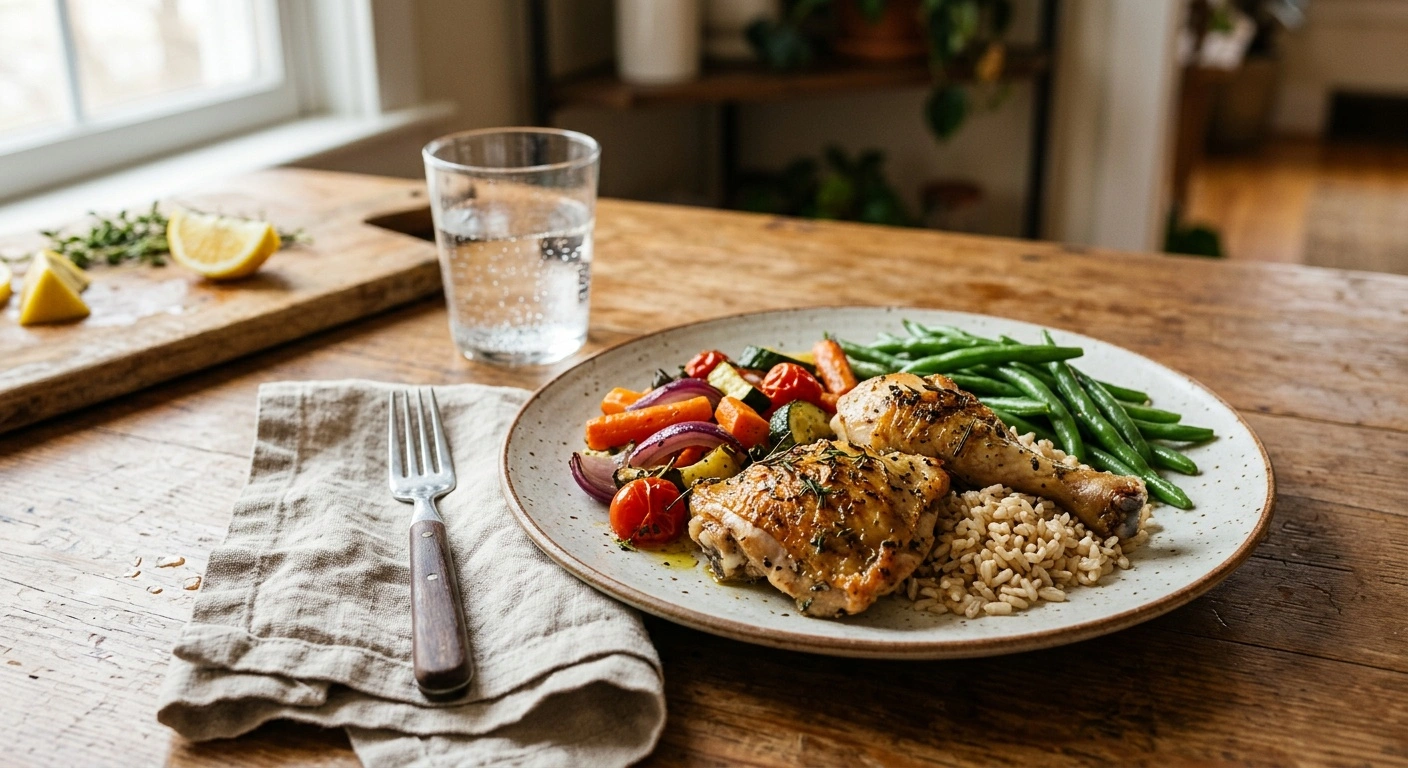
Diabetes friendly meals can support steady blood sugar while still delivering satisfying textures and well-seasoned food. The basic approach is practical: balance carbohydrates with protein, fiber, and unsaturated fats.
People respond to carbohydrates differently, so portions still matter. Monitor your blood sugar as directed, and follow guidance from your doctor or registered dietitian.
How to build diabetes friendly meals
Start with a plate rather than a list of forbidden foods. Fill half with non-starchy vegetables, then reserve one quarter for lean protein. Use the remaining quarter for whole grains, beans, or another carbohydrate source.
This method adds structure without requiring complicated recipes. It also leaves room for foods you enjoy.
Choose carbohydrates with fiber
Carbohydrates have the most direct effect on blood sugar. However, fiber slows digestion and can make a meal more filling. Useful choices include lentils, chickpeas, oats, barley, quinoa, and whole-grain bread.
Fruit can also fit into a balanced meal plan. Pair a modest portion with yogurt, nuts, cheese, or another protein source.
Add a reliable source of protein
Protein gives a meal substance and helps with fullness. Fish, chicken, turkey, eggs, tofu, tempeh, beans, and plain Greek yogurt all work well.
Cooking method matters. Roast, grill, steam, poach, or sauté proteins instead of coating them in sugary sauces or heavy breading.
Use fats with intention
Olive oil, avocado, seeds, and nuts bring richness to simple food. Measure them rather than pouring freely, since small portions contain significant calories.
A sharp vinaigrette often needs only a little oil. Mustard, citrus juice, vinegar, garlic, and herbs can carry much of the seasoning.
Practical meal ideas for breakfast, lunch, and dinner
Breakfasts with staying power
Plain Greek yogurt with berries, walnuts, and cinnamon takes minutes to assemble. Choose yogurt without added sugar, then adjust the fruit portion to suit your carbohydrate target.
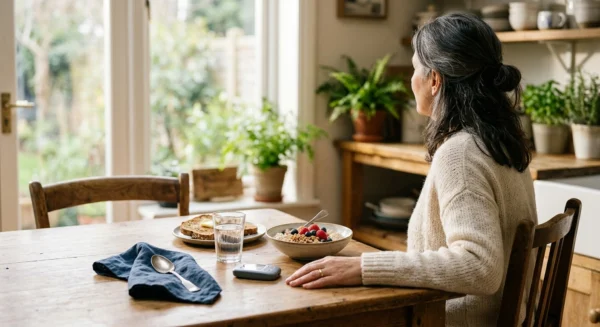
For a hot breakfast, cook rolled or steel-cut oats and stir in chia seeds. Serve them with a boiled egg or a spoonful of nut butter.
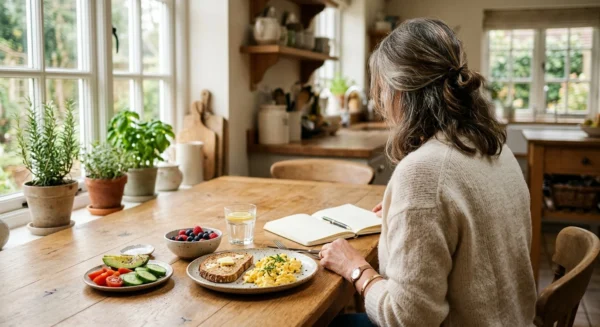
Eggs also make a solid base for vegetables. Scramble them with spinach, mushrooms, and peppers, then add one slice of whole-grain toast.
Lunches that travel well
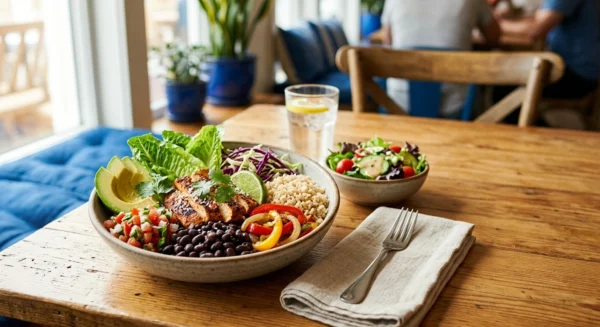
A grain bowl works best when vegetables take up most of the container. Add grilled chicken or tofu, a measured scoop of quinoa, and a lemon-based dressing.
Lentil soup offers fiber and protein in one pot. Check canned versions for sodium, or cook a batch with carrots, celery, tomatoes, and cumin.
For sandwiches, use whole-grain bread and a lean filling. Turkey, tuna, egg, or hummus can work, especially with lettuce, tomato, cucumber, and peppers.
Dinners built around vegetables
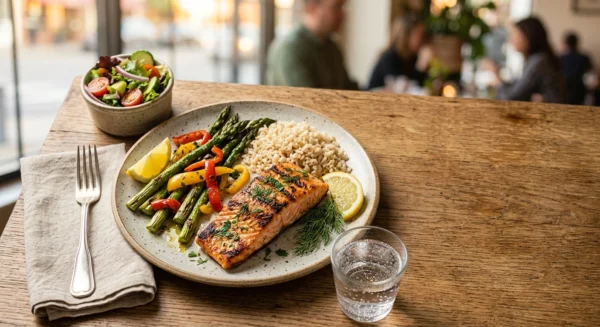
Sheet-pan dinners reduce cleanup and make portions easy to see. Roast salmon or chicken beside broccoli, cauliflower, and zucchini. Add a small sweet potato if it fits your plan.
Stir-fries also suit diabetes friendly meals because they use plenty of vegetables and cook quickly. Choose a lean protein, then serve the mixture over a moderate portion of brown rice.
Tacos can remain on the menu. Fill corn tortillas with grilled fish, cabbage, salsa, and avocado. Keep rice and beans in measured portions if you serve them alongside.
Season food without relying on sugar
Good seasoning makes a structured meal feel complete. Use toasted spices, fresh herbs, citrus zest, garlic, ginger, chiles, and vinegar to create depth.
Read labels on bottled sauces and dressings. Barbecue sauce, teriyaki sauce, ketchup, and sweet chile sauce may contain substantial added sugar.
You can often make a faster sauce at home. Mix plain yogurt with lemon and herbs, or combine tahini with water, garlic, and vinegar.
Plan portions and snacks
A serving size on a package may not match the amount you usually eat. Use measuring cups or a kitchen scale until portions become familiar.
For snacks, combine carbohydrates with protein or fat. Try an apple with peanut butter, vegetables with hummus, or whole-grain crackers with cheese.
Still, snacks are not mandatory. Eat them when they support your medication schedule, hunger needs, or clinician’s advice.
Keep balanced meals workable
Consistency matters more than complicated cooking. Keep frozen vegetables, canned beans, eggs, whole grains, and plain yogurt available for quick meals.
Prepare one protein and one grain ahead of time. Then change the vegetables, herbs, and sauces throughout the week to avoid repetition.
Well-planned diabetes friendly meals should fit your schedule, preferences, and health needs. Build each plate with care, season it properly, and adjust portions using your blood sugar readings and clinical guidance.