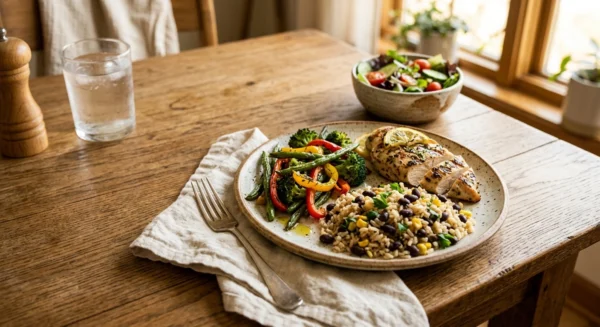
A stable blood sugar meal plan usually starts with the Diabetes Plate Method. Fill half your plate with non-starchy vegetables, one quarter with lean protein, and one quarter with carbohydrate foods. This structure makes carbohydrate portions easier to see and may reduce sharp glucose rises.
Steadier glucose does not require eliminating carbohydrates or buying specialty foods. Instead, choose reasonable portions and pair carbohydrates with protein, fiber, or healthy fat. Spread meals through the day in a way that fits your schedule.
The full-day menu below provides general education, not a personal prescription. Your needs depend on your body size, activity, glucose goals, food preferences, health conditions, and medications. Pregnancy and kidney or heart conditions may also affect your plan.
This approach may help adults with prediabetes or type 2 diabetes. People with type 1 diabetes can use it alongside prescribed carbohydrate counting and insulin therapy. Gestational diabetes requires an individualized plan because carbohydrate timing and portions can matter during pregnancy.
A registered dietitian nutritionist or certified diabetes care and education specialist can tailor these ideas to your needs.
How a Stable Blood Sugar Meal Plan Works
Carbohydrates affect glucose most directly because the body breaks them down into glucose. Bread, rice, pasta, cereal, fruit, milk, beans, potatoes, sweets, and sugary drinks contain carbohydrate. However, each food may affect people differently.
One carbohydrate serving contains about 15 grams. The right number of servings at a meal varies by person.
Fiber, protein, and fat generally slow digestion. As a result, glucose may rise more gradually after a balanced meal. However, a large meal can still cause a prolonged high reading.
Beans, oats, whole grains, vegetables, and whole fruit provide carbohydrate plus fiber. These foods also tend to satisfy hunger better than highly refined choices.
Regular meal timing helps some people spot patterns and manage portions. Still, no single schedule works for everyone, and snacks are not always necessary.
Insulin and some medications, especially sulfonylureas, can cause low blood sugar. Discuss meal timing with your doctor, pharmacist, or diabetes care team before changing your routine.
A practical meal usually includes:
- Non-starchy vegetables: Leafy greens, broccoli, cauliflower, green beans, peppers, tomatoes, mushrooms, zucchini, cabbage, or okra.
- Lean protein: Fish, skinless poultry, eggs, tofu, tempeh, beans, lentils, or lean meat.
- A measured carbohydrate food: Brown rice, corn, potatoes, oats, whole-grain bread, beans, fruit, or milk.
- A modest amount of unsaturated fat: Nuts, seeds, avocado, olive oil, or natural peanut butter.
- A low-sugar or sugar-free drink: Water, sparkling water, or unsweetened tea or coffee.
One Example of a Full Day of Eating
This sample day uses ordinary, affordable foods. It is not a required menu, and the listed portions will not suit everyone. Some people need more carbohydrate or protein, while others need less.
The snacks are optional. You may not need one if you feel comfortable between meals and your glucose stays within your target range. A planned snack may help when meals fall far apart or your medication schedule requires one.
Use your glucose readings, hunger, energy, and care team’s advice to assess the pattern. Look for repeated results under similar conditions rather than judging one reading.
Breakfast: Oatmeal, Eggs, and Berries
For breakfast, try plain oatmeal topped with berries and walnuts, plus an egg on the side. Oats and berries supply carbohydrate and fiber. The egg and walnuts add protein and fat.
This combination may produce a steadier rise than sweetened cereal, juice, or a pastry eaten alone. Choose plain oats because flavored packets often contain added sugar.
You can cook oatmeal with water, milk, or an unsweetened fortified soy beverage. Remember that regular milk contains natural carbohydrate. Sweetened coffee creamers and syrups can also add substantial carbohydrate without making breakfast more filling.
- Plain oatmeal made with water, milk, or unsweetened soy beverage
- A small handful of berries
- A spoonful of chopped walnuts or natural peanut butter
- One cooked egg or another protein choice
- Water, unsweetened tea, or coffee with limited added sugar
For a lower-cost breakfast, use store-brand oats, frozen berries, and peanut butter. You can also prepare overnight oats for busy mornings. Count the carbohydrate in the oats, milk, fruit, and sweeteners.
People with type 1 diabetes should include every carbohydrate-containing ingredient in their usual calculation. Follow the insulin plan from your diabetes care team.
Optional Morning Snack: Fruit With Protein
A small apple with peanut butter can bridge a long gap between breakfast and lunch. The apple provides carbohydrate and fiber, while peanut butter adds protein and fat. You could also pair a pear with nuts or plain yogurt with berries.
Whole fruit usually satisfies hunger better than juice because it retains fiber and takes longer to eat. Juice can raise glucose quickly, even without added sugar. Treat it as a concentrated carbohydrate rather than a free beverage.
Juice can help treat low blood sugar. However, it may not suit everyday meals when you want to limit rapid glucose rises.
Skip the snack if you are not hungry and your treatment plan does not require one. If you take insulin or medication that can cause lows, ask your care team about planned snacks.
Lunch: A Bean and Chicken Grain Bowl
Start lunch with salad greens, tomatoes, cucumber, peppers, or other non-starchy vegetables. Add grilled chicken, canned tuna, tofu, or another lean protein. Finish with a measured portion of brown rice, quinoa, corn, beans, or a combination.
Beans provide carbohydrate, fiber, and plant protein. They still affect glucose, so portion size matters. Rinsed, low-sodium canned beans offer an inexpensive and convenient option.
- Half the bowl: Mixed non-starchy vegetables
- One quarter: Grilled chicken, tuna, tofu, or another lean protein
- One quarter: Brown rice, beans, corn, or another carbohydrate food
- Flavoring: Salsa, lemon juice, vinegar, herbs, or a small amount of olive-oil dressing
- Drink: Water or unsweetened tea
Sauces and dressings can change the meal quickly. Creamy dressings may add saturated fat, while sweet sauces add carbohydrate and sugar. Use a smaller amount or serve the dressing on the side for easier portion control.
Keep meat, dairy products, and other perishable foods chilled when packing lunch. Leftover vegetables, chicken, beans, and grains make a quick bowl without requiring a separate diet meal.
Optional Afternoon Snack: Yogurt or Vegetables With Dip
An afternoon snack may help if dinner comes late or hunger leads to unplanned grazing. Try plain Greek yogurt with cinnamon and berries. Sliced peppers, carrots, or cucumber with hummus also work, although hummus and carrots contain some carbohydrate.
Check the Nutrition Facts label because flavored yogurt may contain substantial added sugar. Start with the serving size and total carbohydrate. That number includes starch, natural sugar, added sugar, and fiber.
The fiber line helps identify higher-fiber choices. The added sugars line shows how much sugar the manufacturer added during processing.
“No added sugar” does not mean “no carbohydrate.” Milk, yogurt, and fruit contain natural sugars that count toward total carbohydrate. A low-sugar product may also contain starch that raises glucose.
Do not use routine snacks to cover recurring lows without seeking medical advice. Insulin or sulfonylureas may need professional review when lows occur repeatedly.
Dinner: Fish, Vegetables, and a Baked Potato
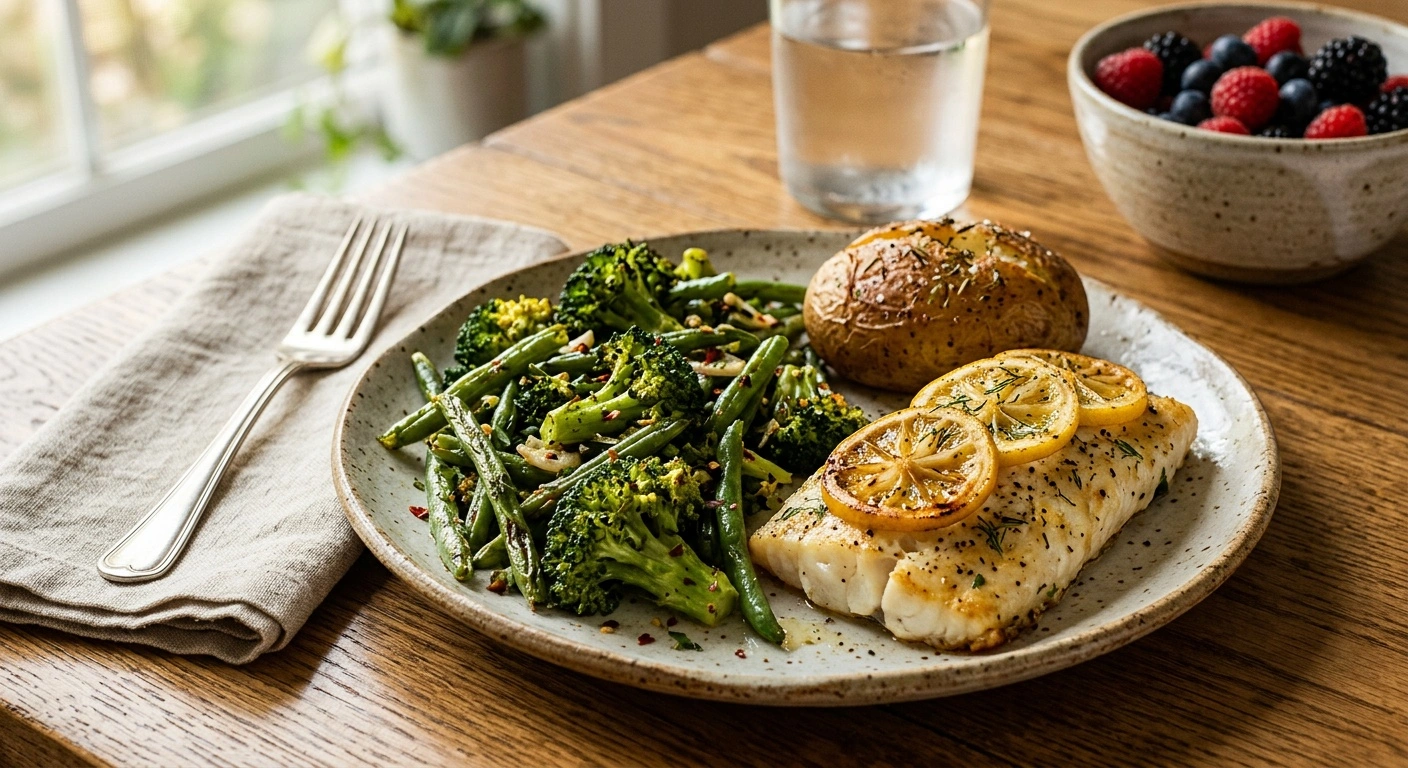
Use the same plate pattern at dinner. Fill half the plate with non-starchy vegetables, one quarter with protein, and one quarter with carbohydrate.
For example, serve baked fish with roasted broccoli and a small baked potato. Season the fish with lemon, pepper, garlic, or herbs. For the potato, plain yogurt can replace some or all of a heavy topping.
The potato supplies most of the carbohydrate in this meal. Broccoli adds fiber and volume with less carbohydrate. Potato skin contains fiber, but the entire potato still counts as a carbohydrate food.
A large restaurant potato may equal several portions. Choose a smaller potato or save part for another meal.
- Half the plate: Roasted broccoli, green beans, cabbage, or mixed vegetables
- One quarter: Baked fish, chicken, tofu, or lean meat
- One quarter: Potato, brown rice, whole-grain pasta, or corn
- Optional flavor: Herbs, lemon, salsa, or a modest amount of olive oil
- Drink: Water or another unsweetened beverage
Frozen vegetables offer similar nutritional value to fresh produce when they do not include heavy sauces. Canned vegetables also work. Draining and rinsing them can reduce some sodium.
If you serve dessert, count its carbohydrate as part of the full meal. Eating it last does not remove its effect on glucose.
A useful dinner does not need to be perfect. Build a repeatable structure that accommodates family meals, cultural foods, preferences, and practical portions.
Optional Evening Snack
Not everyone needs an evening snack. Automatic snacking in front of the television can make portions hard to track.
If you feel hungry, try plain yogurt, whole-grain crackers with cheese, or fruit with nuts. Pairing carbohydrate with protein or fat may make the snack more satisfying.
Do not assume a bedtime snack will fix high morning glucose. Possible causes include a large evening meal, insufficient medication coverage, illness, stress, poor sleep, or the dawn phenomenon.
Researchers continue to debate the Somogyi effect, which links overnight lows to rebound morning highs. Evidence suggests it occurs less often than once believed.
Collect information across several nights and discuss the pattern with your diabetes care team. Never change medication timing or dosage based on a single morning reading.
How to Adjust the Meal Pattern
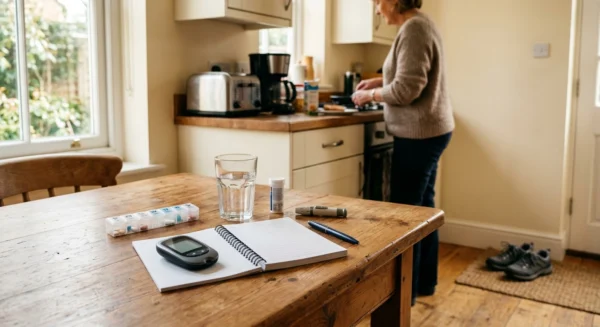
Two people may respond differently to the same meal. A glucose meter or continuous glucose monitor can reveal patterns related to portions, food combinations, and meal timing.
A CGM measures glucose in interstitial fluid rather than directly in blood. Therefore, its reading may lag behind blood glucose by several minutes. Confirm the result with a fingerstick meter when symptoms do not match the CGM reading.
For many nonpregnant adults, the American Diabetes Association provides general glucose targets. These include 80 to 130 mg/dL before meals and below 180 mg/dL after meals. Check the after-meal level one to two hours after the meal begins.
Many CGM users aim to spend more than 70% of the day between 70 and 180 mg/dL. Your care team should individualize all glucose targets.
Change one manageable factor at a time when reviewing meals. For example, compare a smaller rice portion with your usual serving. You could also add vegetables or replace a sugary drink with water.
Keep a short record of meals, activity, stress, sleep, and glucose results. Bring it to your doctor, pharmacist, dietitian, or diabetes education specialist. The record can help separate food-related patterns from issues that require treatment changes.
Troubleshooting Common Glucose Patterns
Glucose Rises Sharply After Breakfast
Situation: Your glucose rises more after breakfast than after similar meals later in the day.
Possible causes: Morning hormones can make the body more resistant to insulin. Sweet cereal, juice, pastries, and flavored coffee may also supply concentrated carbohydrate with little protein or fiber.
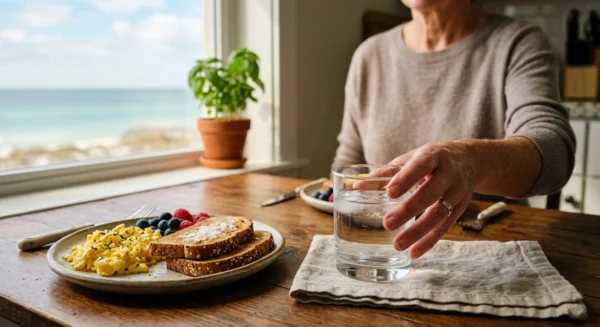
What to try: Choose a measured whole-grain portion with protein and fiber. Eggs with whole-grain toast and vegetables provide one option. You can also replace juice with whole fruit and an unsweetened drink.
If the pattern continues, share the readings with your diabetes care team. Do not adjust medication on your own.
You Are Hungry Soon After Lunch
Situation: You start looking for food within an hour or two of lunch.
Possible cause: The meal may lack protein, fiber, vegetables, or enough food overall. Removing more carbohydrate may not solve the problem.
What to try: Add a clear protein source and more non-starchy vegetables. Beans, tuna, chicken, eggs, tofu, or leftover fish can make lunch more substantial.
Ask a registered dietitian for help if persistent hunger interferes with your nutrition or glucose goals.
Glucose Stays High for Hours After Dinner
Situation: Your glucose rises slowly after dinner and remains high into the evening.
Possible cause: A large meal rich in carbohydrate and fat can delay digestion and extend the glucose rise. Pizza, fried foods, restaurant meals, and large pasta portions commonly cause this pattern.
What to try: Return to the plate method and reduce the concentrated carbohydrate portion. Add vegetables rather than skipping the meal. Record the food and glucose pattern for your care team.
If you use insulin, ask your clinician how to manage prolonged meal-related rises. Do not change insulin timing or dosage independently.
You Develop Low Blood Sugar Between Meals
Situation: Your glucose drops below 70 mg/dL between meals, especially after activity or a delayed meal.
Possible causes: Insulin, sulfonylureas, exercise, alcohol, or a food and medication mismatch can contribute. People who do not use glucose-lowering medication face a lower risk of medication-related hypoglycemia.
What to do: Follow the 15-15 rule. Take 15 grams of fast-acting carbohydrate, wait 15 minutes, and check your glucose again. Repeat if the reading remains below 70 mg/dL.
Glucose tablets, glucose gel, regular soda, or juice can treat a low. Measure liquid portions carefully. Avoid chocolate for initial treatment because its fat slows sugar absorption.
A reading below 54 mg/dL is clinically significant. Contact your doctor, pharmacist, or diabetes care team promptly about recurring lows.
Confusion, seizure, or unconsciousness during a low blood sugar episode signals an emergency. Call 911 and give glucagon if a trained person has it available. Never give food or drink to an unconscious person.
Making the Plan Affordable and Realistic
A stable blood sugar meal plan does not require salmon, protein powder, specialty bread, or products labeled for diabetes. Eggs, canned tuna, beans, lentils, peanut butter, oats, frozen vegetables, brown rice, and seasonal fruit can build balanced meals.
Store brands often cost less and work just as well. Frozen produce also reduces waste because you can use only what you need.
Cook extra protein, grains, and vegetables when time allows. Tonight’s chicken and vegetables can become tomorrow’s salad or grain bowl. Keep sauces separate so each person can control the amount.
For packaged foods, check the serving size and total carbohydrate first. Fiber and added sugars provide useful context. However, total carbohydrate best shows the food’s direct carbohydrate contribution.
Compare similar products instead of relying on claims such as “natural,” “multigrain,” or “light.” These terms do not guarantee less carbohydrate or more fiber.
Keep several quick foods available for busy days. Beans, frozen vegetables, eggs, whole-grain toast, and fruit can become a balanced meal in minutes. A practical pantry makes consistent meals easier.
Building a Day You Can Repeat
The most useful eating pattern works on regular workdays, weekends, and busy evenings. Start with the plate method. Add a visible protein source, a measured carbohydrate portion, and plenty of non-starchy vegetables.
Use snacks based on hunger, activity, meal timing, glucose patterns, and medical guidance. A sample menu does not require you to eat them.
Give changes enough time to reveal a pattern, but do not judge yourself by one reading. Sleep, stress, illness, hormones, activity, and medication also affect glucose.
If meals repeatedly lead to readings outside your target, bring your records to your diabetes care team. A registered dietitian or diabetes education specialist can personalize your stable blood sugar meal plan. The goal is practical food that fits your culture, budget, appetite, health, and daily routine.